Shipping Powersports Parts: Packaging & Carrier Best Practices
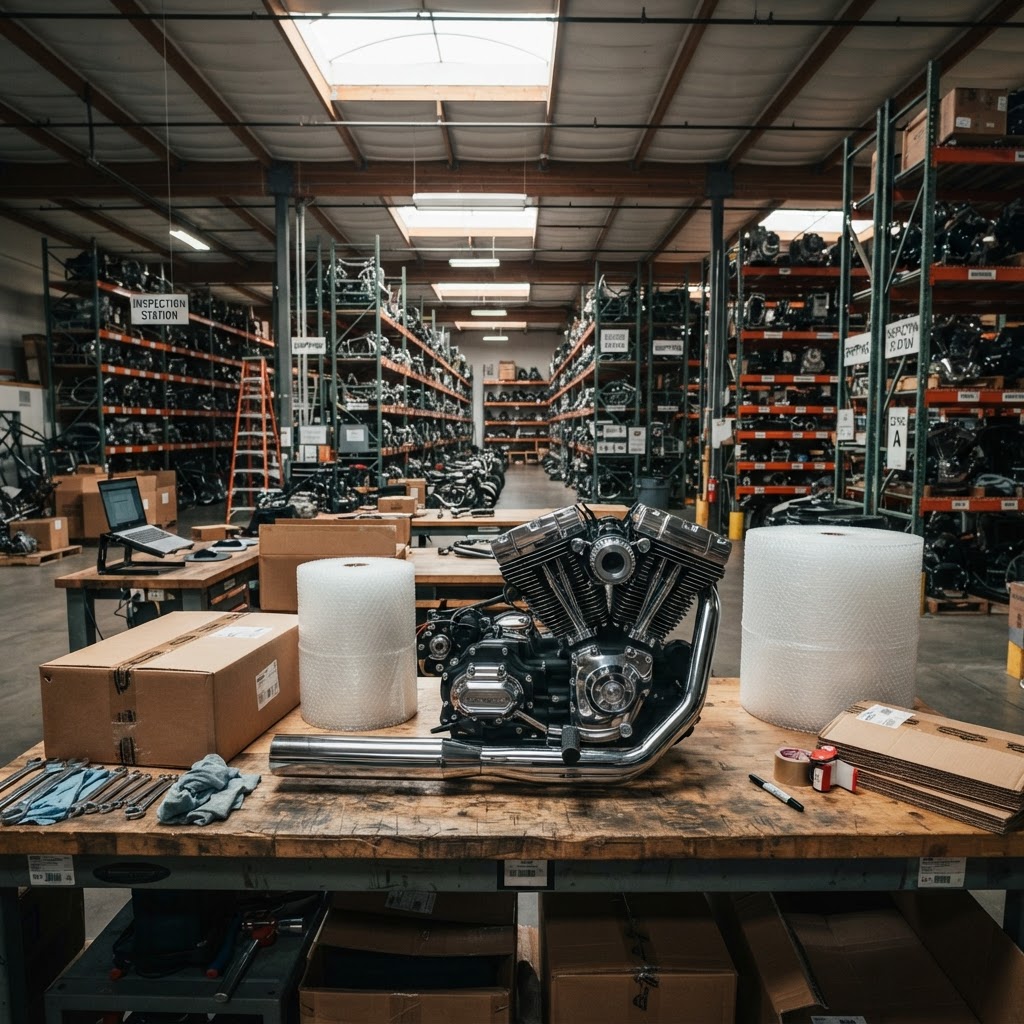
Shipping powersports parts can be one of the most challenging aspects of running a salvage or dismantling business. Whether you are dealing with a heavy transmission, a delicate 1977 Yamaha DT400 tachometer cable, or bulky body hardware from a Brute Force 750, getting the item to the buyer in one piece is critical. Poor packaging leads to damaged parts, angry customers, and costly returns that eat directly into your profit margins.
In the fast-paced world of e-commerce, buyers expect fast, safe delivery. For salvage yards and individual sellers alike, mastering the art of shipping motorcycle parts and ATV components is what separates the hobbyists from the professionals. Every time a part is returned because it was damaged in transit, you lose not only the sale but also the cost of shipping both ways, plus the time spent dealing with the customer.
That is why having a solid strategy for powersports shipping is essential. In this comprehensive guide, we will break down exactly how to package various types of parts, choose the right carriers, and implement best practices that will drastically reduce your return rate.
The Real Cost of Damaged Parts
When a part is damaged during shipping, the financial impact goes far beyond the refund you have to issue. Let's look at the hidden costs associated with poor packaging.
Direct Financial Losses
First, there is the obvious cost: you have to refund the buyer. But you also lose the money spent on the original shipping label, and often, you are on the hook for the return shipping. If the part is destroyed, you cannot resell it, meaning the acquisition cost and the time spent pulling, cleaning, and listing the part are completely lost.
Damage to Your Reputation
In marketplaces like eBay Motors, your seller rating is your lifeline. Negative feedback related to damaged items or poor packaging can deter future buyers. When a customer receives a 1988 Kawasaki KDX200 Spark Arrestor Muffler that looks like it was run over by the delivery truck, they are going to leave a bad review. Consistent negative feedback can lead to account restrictions or lower visibility in search results.
Time Spent on Customer Service
Dealing with returns takes time. You have to communicate with the frustrated buyer, open claims with the shipping carrier, process the refund, and figure out what to do with the damaged part. This is time that could be spent pulling more parts and creating new listings on RevParts to grow your business.
Essential Parts Packaging Materials
Before you can ship a part safely, you need the right materials. Skimping on packaging supplies is a false economy. Investing a few extra dollars in quality materials will save you hundreds in avoided returns.
Choosing the Right Boxes
Always use sturdy, corrugated cardboard boxes. For heavy items like engine cases or transmissions, use double-walled boxes. Avoid reusing old, weak boxes that have lost their structural integrity. Keep a variety of sizes on hand so you aren't paying to ship empty space.
Protective Wrapping
Bubble wrap is your best friend. Use large-bubble wrap for heavy items and small-bubble wrap for delicate electronics like stators or CDI boxes. Never pack a part directly against the side of the box; there should always be a buffer of protective material.
Void Fill
Once the wrapped part is in the box, fill all empty space. The part should not move when you shake the box.
- Good: Packing peanuts, crumpled kraft paper, air pillows (for lighter items).
- Bad: Newspaper (it compresses too easily), clothing, or random trash.
Tape and Labels
Use high-quality packing tape that is at least 2 inches wide. Tape all seams of the box securely. Ensure your shipping labels are printed clearly and attached flat on the largest surface of the box, avoiding seams.
Packaging Strategies by Part Type
Different parts require different approaches to packaging. What works for a wiring harness will not work for a heavy exhaust system.
Electrical Components
Electrical parts are fragile and sensitive to moisture and static. Items like wiring harnesses, switches, and that delicate 1977 Yamaha DT400 tachometer cable need special care.
- Coil wires loosely to prevent breaking internal strands.
- Place items in anti-static bags if possible.
- Wrap in bubble wrap and place in a sturdy box with plenty of void fill.
Body and Frame Parts
Body panels, fenders, and frame sections (like Brute Force 750 Body Hardware) are prone to scratching and cracking.
- Wrap the entire piece in foam wrap or heavy craft paper to protect the finish.
- Pad the corners and edges heavily, as these are the most likely impact points.
- Use a custom-sized box if necessary to prevent the item from shifting.
Engine and Transmission Parts
These are heavy and often contain residual fluids.
- Drain all fluids completely. This is non-negotiable. Carriers will reject leaking packages, and it can ruin other items.
- Double-bag the part in heavy-duty plastic to contain any remaining drips.
- Use double-walled boxes and reinforce the bottom with extra cardboard.
- Consider building a small wooden crate for entire engine blocks or heavy transmissions.
Exhaust Systems
Exhausts, like a 1988 Kawasaki KDX200 Spark Arrestor Muffler, are long, awkwardly shaped, and easily dented.
- Wrap the muffler heavily in bubble wrap.
- Use telescopic boxes or join two boxes together securely with plenty of tape to accommodate the length.
- Ensure the ends are heavily padded so they don't punch through the cardboard during transit.
Choosing the Right Shipping Carriers
Not all carriers are created equal, and the best choice often depends on the size and weight of the part you are shipping.
USPS (United States Postal Service)
USPS is excellent for smaller, lighter parts. Services like Ground Advantage and Priority Mail are cost-effective for items under a few pounds, like electrical components or small hardware. Flat Rate boxes can also be a great deal for dense, heavy items that fit inside.
UPS and FedEx
For larger, heavier parts, UPS and FedEx are generally the go-to choices. They handle larger dimensions better than USPS and offer reliable tracking. When shipping motorcycle parts like wheels, forks, or exhaust systems, compare rates between the two. Keep an eye out for dimensional weight charges—shipping a large, light box can sometimes cost more than a small, heavy one.
LTL Freight for Oversized Items
If you are shipping a complete engine, a heavy ATV frame, or large body panels, you will likely need to use Less-Than-Truckload (LTL) freight. Freight requires the item to be strapped securely to a pallet or crated. It is more expensive and requires more coordination, but it is the only safe way to transport massive powersports parts.
Best Practices to Avoid Returns
Packaging is only half the battle. How you list and document your parts plays a huge role in preventing returns.
Accurate Listings and Photos
Be brutally honest in your listings. If a Brute Force 750 plastic panel has a scratch, photograph it clearly and mention it in the description. RevParts makes it easy to upload multiple high-resolution photos so buyers know exactly what they are getting. Surprises lead to returns.
Verify Fitment
One of the biggest reasons for returns in the powersports industry is that the part simply doesn't fit the buyer's machine. Provide OEM part numbers whenever possible (like the PN 1M2-83550-00-00 for the Yamaha tachometer cable). Use RevParts' built-in fitment data tools to ensure your listings accurately reflect which years and models the part is compatible with.
Clean Your Parts
No one wants to receive a greasy, dirty part. Take the time to clean items before taking photos and certainly before packaging them. A clean part looks more professional, sells for a higher price, and is less likely to be returned because the buyer thought it was in worse condition than it actually was.
Case Study: The Broken Stator Cover
Let's look at a real-world example of how poor packaging costs money. A seller listed a pristine stator cover for a popular sportbike. They sold it for $85.
Instead of wrapping it properly, they put it in a priority mail box with a single sheet of crumpled paper. During transit, the box was dropped. The heavy metal cover punched right through the thin cardboard, and the mounting tabs snapped off.
The Result:
- The buyer received a useless part and demanded a refund.
- The seller lost the $85 sale.
- The seller lost $12 in initial shipping.
- The seller lost $12 in return shipping.
- The pristine part is now scrap metal.
If the seller had spent $2 on bubble wrap and a sturdy box, they would have kept their profit and their customer. When you use RevParts to manage your inventory, you can easily track your margins and see exactly how much returns are hurting your bottom line.
Conclusion: Protect Your Profits with Proper Shipping
Shipping powersports parts doesn't have to be a headache. By understanding the specific needs of different components—from delicate electrical sensors to heavy transmissions—you can implement a packaging strategy that ensures your parts arrive safely every time.
Investing in quality materials, choosing the right carriers, and being transparent in your listings are the keys to reducing returns and building a stellar reputation as a seller. Remember, your job isn't done when the part sells; it's done when the buyer installs it and leaves a positive review.
Managing your listings, tracking inventory, and ensuring accurate fitment data is crucial to a smooth operation. RevParts provides the tools you need to streamline your workflow so you can focus on pulling parts and packing them right.
Ready to start listing your parts? Sign up free at RevParts → https://revpartspro.com/become-seller
Stay in the loop
Get the latest powersports tips, new parts alerts, and seller guides — straight to your inbox. No spam.