Build a Profitable Powersports Parts Business
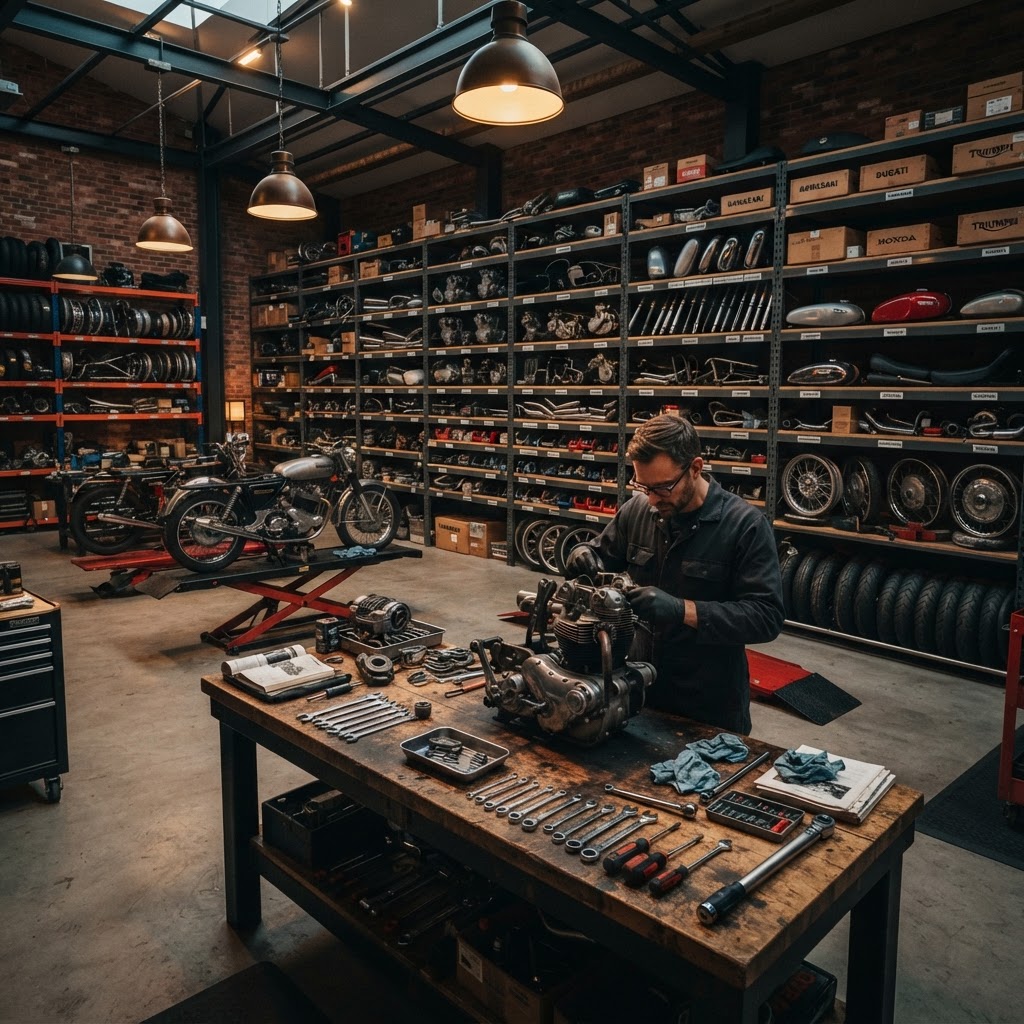
Many of the most successful dismantlers didn't start with a massive commercial warehouse, a sophisticated business plan, or a fleet of delivery trucks. They started in a dusty two-car garage with a single wrecked motorcycle, a basic set of socket wrenches, and a simple desire to make a few extra bucks to fund their own riding habits. You buy a crashed bike, pull off the salvageable components, list them online, and suddenly you realize that the sum of the parts is worth significantly more than the whole. That initial lightbulb moment is exactly how the journey begins for the modern motorcycle parts seller.
But there is a massive gulf between casually parting out a single dirt bike on the weekends and running a highly profitable, scalable powersports business. The transition from garage hobbyist to professional dismantler requires a fundamental shift in mindset. It requires refined operational processes, strategic sourcing, and most importantly, the right technology to manage hundreds—if not thousands—of SKUs efficiently. When you are small, you can afford to be disorganized. When you scale, disorganization eats your profit margins alive. It is no longer just about your ability to turn wrenches; it’s about mastering inventory management, optimizing marketplace listings, and streamlining your fulfillment pipeline to operate like a well-oiled machine.
If your garage or shop is currently overflowing with engines, stators, and suspension components, and you find yourself spending exponentially more time typing up descriptions on a laptop than actually working on bikes, you have hit the classic dismantler's bottleneck. This comprehensive, long-form guide will walk you through the exact blueprint to transform your passion project into a thriving, highly lucrative operation, and how leveraging the right tools as a RevParts seller can be the catalyst that permanently accelerates your business growth.
The Economics of the Salvage Market
Before you can effectively scale your operations, you need to deeply understand why the salvaged parts market exists and why it is so lucrative. The powersports industry is unique. Unlike mass-market automotive parts, which are heavily supported by cheap aftermarket alternatives, powersports enthusiasts often demand original equipment manufacturer (OEM) parts. Aftermarket fitment issues are notorious in the powersports world, meaning a used OEM part is almost always preferred over a brand-new, cheap replica.
Furthermore, dealerships routinely stop carrying replacement parts for motorcycles, ATVs, and side-by-sides once the vehicle is more than a decade old. This creates an artificial scarcity in the market. The riders of these older machines have no choice but to turn to eBay Motors and specialized online marketplaces to keep their vehicles running.
As a dismantler, you are essentially providing a crucial recycling service to the riding community. You buy machines that insurance companies have deemed total losses, or that frustrated owners have given up on, and you liberate the perfectly functional components trapped inside them. Your profit margin is the reward for the labor of extraction, testing, and distribution. Understanding this economic reality allows you to price your parts confidently and recognize the inherent value in seemingly mundane components.
Strategic Sourcing: Buying the Right Bikes for the Best Margins
To run a successful powersports business, you need a steady, reliable influx of raw materials—meaning, you need to buy bikes at the right price. The golden rule of the dismantler trade is that you make your money when you buy, not when you sell.
Where to Source Inventory
- Public and Dealer Auctions: Platforms like Copart and IAAI are the lifeblood of large-scale dismantlers. While you will have to factor in buyer fees and transportation costs, auctions provide an endless supply of wrecked, flooded, or theft-recovered vehicles.
- Local Classifieds: Facebook Marketplace, Craigslist, and local riding forums are excellent for finding "mechanic's specials" or unfinished project bikes. Sellers here are often highly motivated to clear up garage space.
- Dealership Trade-Ins: Build relationships with local powersports dealers. They frequently take in older, high-mileage, or non-running bikes on trade that they have no intention of putting on their showroom floor. You can often buy these wholesale.
What to Look For
When evaluating a potential buy, do not just look at the shiny, obvious parts like the engine or the fuel tank. The real profit in a powersports business often lies in the small, hard-to-find components. Always check the condition of the CDI box, the wiring harness, the gauge cluster, and the switchgear. A bike with a blown motor but pristine electronics and bodywork can still yield massive returns.
The Art of the Tear-Down and Categorization
Once a bike lands in your shop, the tear-down process must be swift, methodical, and meticulously organized. Amateurs pull parts off randomly; professionals follow a standardized checklist.
As you strip the vehicle, you must immediately categorize the components. A highly effective method is to sort your inventory directly into the core active categories that online marketplaces utilize. For example, grouping elements into Controls, Electrical, Body/Frame, Transmission, and Exhaust will save you massive headaches later during the listing phase.
Standardizing Your Process
- Test Before You Pull: Whenever possible, hook up a battery and compression tester. Verify that the electrical components function, the gauges sweep, and the motor turns over. Video document this if possible, as it builds incredible buyer trust.
- Clean the Parts: Do not list greasy, muddy parts. A quick hit with a degreaser and a parts washer brush can increase the perceived value of a part by 20% to 30%.
- Bag and Tag: The moment a part comes off the bike, its mounting hardware should be placed in a heavy-duty ziplock bag and zip-tied to the part itself. Buyers love receiving the original bolts with their purchase.
- Labeling: Use masking tape or dedicated inventory tags to write the year, make, model, and the specific part name immediately.
Overcoming the Listing Bottleneck
This is the precise stage where most growing dismantlers hit a brick wall. You have successfully sourced a great bike, torn it down in record time, and now have 120 clean, tagged parts sitting on your workbench. Now, you have to photograph them, research the part numbers, determine pricing, and create individual eBay listings for every single item.
Manual listing is an agonizingly slow process. If it takes you 15 minutes to photograph, research, and manually build an eBay listing for a single part, processing one motorcycle could take 30 hours of pure data entry. This bottleneck strangles your cash flow and leaves your shelves full of unlisted dead stock.
That is exactly where RevParts changes the game. Designed specifically for the salvage and dismantler industry, RevParts is a powerful eBay Motors listing tool that automates the most tedious aspects of inventory management. Instead of building listings from scratch, you can rapidly input the donor vehicle's details and let the software help auto-populate fitment data, OEM part numbers, and standardized titles.
Consider these real-world examples of highly specific listings that perform incredibly well when accurately cataloged:
- A pristine 1988 Kawasaki KDX200 Spark Arrestor Muffler. ($150)
- A complete, bagged set of Brute Force 750 Body Hardware ($99.99)
- A highly specific vintage component like a 1977 yamaha dt400 tachometer cable [43O] PN 1M2-83550-00-00 ($40)
Getting those highly technical OEM part numbers (like the 1M2-83550-00-00) into your listing title is absolutely critical for SEO within eBay. Buyers searching for that exact Yamaha cable aren't typing "old motorcycle cable"—they are typing the exact part number. A dedicated listing tool ensures these critical data points are captured quickly and accurately, allowing you to process a whole bike in hours instead of days.
Mini Case Study: Apex Moto Salvage
To understand how this transition looks in the real world, let's look at the journey of Mike, the founder of Apex Moto Salvage (a classic archetype of the successful modern dismantler).
Mike started parting out early 2000s sportbikes in his driveway to pay for his weekend track days. Within a year, his driveway operation was generating $3,000 a month in profit, but Mike was completely burned out. He had parts scattered across his basement, was constantly losing the mounting hardware, and was spending every evening until 2 AM manually uploading photos to eBay.
He realized he couldn't scale without systems. The turning point came when he leased a small 1,500-square-foot industrial bay and transitioned his software stack. As a dedicated RevParts seller, Mike integrated his workflow. He built a dedicated photography booth with bright LED lighting. He implemented a strict bin-location inventory system (e.g., Aisle 3, Shelf B, Bin 12).
Instead of researching every part manually, he used his listing tool to map out the teardown. He could pull a stator, snap three photos with his mobile device, click a pre-populated template, assign it a bin location, and have it live on eBay Motors in under 90 seconds.
By removing the data-entry friction, Mike was able to hire a high-school student to handle the actual teardowns, freeing him up to focus on sourcing better inventory. Within 18 months, Apex Moto Salvage grew from a $36,000/year driveway hustle to a half-million-dollar commercial enterprise processing five bikes a week.
Mastering Storage, Shipping, and Customer Service
Listing your parts quickly is only half the battle; fulfilling those orders efficiently is what keeps your eBay seller rating high and your business profitable.
Intelligent Inventory Storage
Once a part is listed, it must disappear into a logical storage system so you can retrieve it instantly when it sells. Never rely on your memory.
- Use Bin Locations: Every item should have an alphanumeric location code attached to its digital listing.
- Climate Control: Keep delicate electronics, CDIs, and rust-prone unpainted metals in a temperature-controlled, dry environment.
- Heavy Racking: Invest in heavy-duty pallet racking for engines, frames, and wheels. Keep the heavy items on the bottom to prevent workplace injuries.
Streamlining Shipping
Motorcycle parts are notoriously awkward to ship. You will be dealing with long, fragile fork tubes, heavy engine blocks, and bulky, irregularly shaped fairings.
- Standardize Your Boxes: Buy bulk shipping boxes in a few key sizes. For awkward items like exhaust pipes, learn how to "telescope" two boxes together.
- Protect the Parts: Use ample bubble wrap, especially on the mounting tabs of plastic fairings, which are incredibly prone to snapping in transit.
- Freight for Engines: Don't be intimidated by shipping complete motors. Strap them securely to a small custom pallet, build a protective wooden crate around them, and use an LTL (Less Than Truckload) freight broker to arrange pickup.
The Importance of Customer Service
In the powersports business, your reputation is everything. Always under-promise and over-deliver on the condition of your parts. If a gas tank has a small dent, photograph the dent clearly and highlight it in the description. A buyer who knows they are buying a dented tank will be perfectly happy; a buyer who expects a pristine tank and receives a dented one will immediately demand a refund, hit you with negative feedback, and waste your time. Transparent, honest listings eliminate 90% of customer service headaches.
Scaling Your Operation: The Next Level
As your revenue grows, you will eventually reach the limit of what one person can accomplish, even with the best software. Scaling from a solo operation to a true business means learning how to delegate.
First, hire a "wrench." Your time is far too valuable to be spinning ratchets. You can hire an entry-level mechanic or a passionate powersports student to strip the bikes and clean the parts.
Next, optimize your fulfillment. Hire a part-time shipper who comes in for three hours every afternoon to box up the day's orders, print the labels, and hand them off to the UPS or USPS driver.
With the physical labor delegated, your role transitions to the CEO of your salvage yard. Your daily tasks should be restricted to buying inventory at auctions, managing the high-level finances, and overseeing the pricing strategies.
With the RevParts eBay Motors listing tool managing your digital catalog, your inventory stays perfectly synced. When an item sells, it is tracked. When you need to adjust pricing across a whole category, it can be done in bulk. You are no longer working in your business; you are working on your business.
Turn Your Passion Into Profit Today
Transitioning from a garage hobbyist to a highly successful motorcycle parts seller is entirely within your reach. The demand for quality used OEM parts is never going to disappear. Riders will always crash, parts will always break, and dealerships will always discontinue older inventory.
By approaching your teardowns methodically, organizing your storage logically, and utilizing professional-grade software to eliminate the listing bottleneck, you can build an operation that generates incredible margins while keeping the powersports community riding.
Stop letting unlisted inventory collect dust in your shop. Stop spending your weekends doing manual data entry on eBay. It is time to professionalize your workflow, list your inventory faster than ever before, and start seeing the real financial returns your hard work deserves.
Ready to start listing your parts? Sign up free at RevParts → https://revpartspro.com/become-seller
Stay in the loop
Get the latest powersports tips, new parts alerts, and seller guides — straight to your inbox. No spam.