Top Salvage Motorcycle Parts to Pull for Fast Sales & Top Dollar
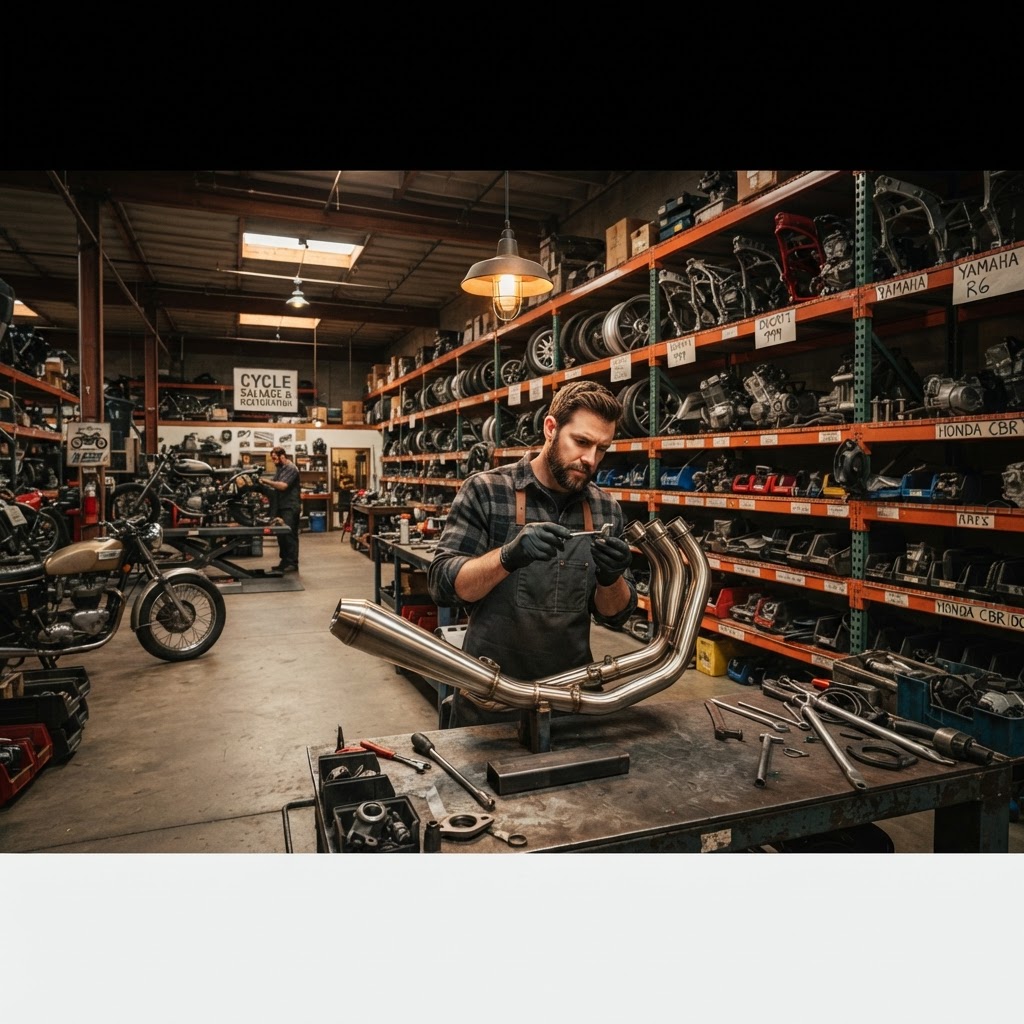
Welcome to the lucrative, fast-paced world of powersports salvage. If you are dismantling motorcycles, ATVs, or UTVs, you already know that there is gold hidden inside every wrecked, non-running, or abandoned machine. However, turning a dusty, crashed bike into a stack of cash requires more than just a wrench and a socket set; it requires a strategic understanding of the market. Not every part is worth your time, and knowing the best parts to sell can be the difference between turning a quick profit and sitting on dead inventory for years.
For professional dismantlers and mechanics, the goal is simple: extract the maximum value from a donor vehicle in the shortest amount of time. If you tear a bike down to the bare engine cases without a plan, you will end up overwhelmed by bins of low-value bolts and brackets. But if you focus on high-demand salvage motorcycle parts that buyers are actively searching for, you can recoup your initial investment in a matter of days.
In this comprehensive guide, we are going to break down exactly which powersports parts to pull first, what commands top dollar on eBay Motors, and how to streamline your entire dismantling and listing workflow. Whether you are dealing with vintage dirt bikes or modern heavy-duty UTVs, mastering your inventory strategy is the key to scaling your powersports salvage business. Let's dive into the ultimate teardown strategy.
The Golden Rule of Powersports Salvage: Time vs. ROI
Before you put a single tool on a salvage vehicle, you need to understand the relationship between time and Return on Investment (ROI). The most successful dismantlers do not completely strip a bike down immediately. Instead, they practice strategic dismantling.
Strategic dismantling means targeting the "low-hanging fruit" first—the parts that are easy to remove, easy to store, and highly desirable to buyers. Your time is your most valuable asset. Spending three hours trying to free a seized swingarm pivot bolt to sell a $30 swingarm is bad business. Conversely, spending ten minutes pulling a clean, functioning ECU that sells for $200 is exceptional business.
When evaluating a new salvage unit, always ask yourself three questions:
- Is this part a common failure point for this specific model?
- How long will it take to remove, clean, photograph, and list?
- How difficult and expensive will this part be to ship to the end buyer?
By running your inventory decisions through this filter, you will naturally gravitate toward the most profitable components. And when it comes to cataloging those components, using a specialized listing tool like RevParts ensures you don't lose track of what you've pulled, what's been listed, and what's ready to ship.
The Best Parts to Sell: High-Value, Fast-Moving Components
Let's get into the specifics. While every make and model has its unique quirks, certain categories of salvage motorcycle parts consistently sell fast and for top dollar across the board. Here is your A-list of powersports salvage components.
1. Exhaust Systems and Mufflers
Exhaust systems are incredibly lucrative in the powersports salvage market. Why? Because they are the first thing to get damaged in a crash or a tip-over. Furthermore, many buyers are looking for OEM exhausts to pass state inspections or return a modified bike to stock before selling it.
Vintage and hard-to-find exhaust parts are particularly valuable. For example, a live listing in the RevParts network currently features a 1988 Kawasaki KDX200 Spark Arrestor Muffler selling for $150. Vintage 2-stroke parts like this are often discontinued by the manufacturer, meaning the salvage market is the only place restorers can find them. When pulling exhaust systems, carefully inspect for deep rust, structural dents (beyond cosmetic scratches), and broken mounting tabs.
2. Body Panels, Plastics, and Frames
Another massive category for fast sales is the Body/Frame category. Fairings, gas tanks, side covers, and fenders are always in high demand. A pristine OEM gas tank without dents or internal rust can easily fetch hundreds of dollars, sometimes thousands if it belongs to a highly sought-after vintage motorcycle.
But don't ignore the hardware! It might seem tedious, but compiling OEM hardware is a highly profitable niche. Buyers doing rebuilds hate hunting down individual specialized bolts. A great example is a current listing for Brute Force 750 Body Hardware going for $99.99. Bagging up the specific bolts, clips, and brackets for a UTV's bodywork takes minimal space and ships incredibly cheaply, making it a pure-profit play.
When dealing with main frames, clean paperwork is everything. A straight, undamaged frame with a clean, clear title is a premium item. Even salvage-titled frames hold significant value for track-day riders or off-road builders.
3. Transmissions and Engine Components
While selling a complete, running engine is great, it presents massive shipping challenges. Savvy dismantlers often make more money—and face fewer shipping headaches—by parting out the engine and Transmission components.
Complete transmission cassette assemblies, primary drives, clutch baskets, and gear sets are highly sought after. Powersports enthusiasts frequently blow up their transmissions through hard riding, missed shifts, or lack of maintenance. A complete transmission gear cluster that has been visually inspected for chipped teeth or severe wear will sell quickly to engine builders.
4. Electrical Components and ECUs
If there is one category that defines "fast cash" in powersports salvage, it is electrical components. These parts are small, lightweight, incredibly easy to ship, and often carry high price tags.
Top electrical parts to pull include:
- ECUs and CDI Boxes: The brains of the operation. New OEM units are astronomically expensive, driving buyers straight to eBay Motors.
- Stators and Rotors: These commonly burn out on older motorcycles and ATVs.
- Wiring Harnesses: An uncut, undamaged main wiring harness is a lifesaver for someone trying to fix a bike that a previous owner "customized" with wire nuts and electrical tape.
- Gauges and Instrument Clusters: High demand, especially if the mileage is clearly documented.
The Slow Burners: What to Pull and What to Scrap
Not every part is an overnight success. Some components are "slow burners"—parts that will eventually sell but might sit on your shelf for a year.
Suspension components (forks and shocks) are valuable but require careful inspection. If the fork tubes are pitted or bent, they are scrap. If they are straight but leaking oil, they are sellable but must be clearly marked as needing a rebuild.
Wheels are another mixed bag. A perfectly straight OEM wheel for a modern sportbike is a high-dollar item. A pitted, slightly out-of-true spoke wheel from a 1980s cruiser might not be worth the massive shipping cost.
For parts like generic footpegs, heavily rusted brackets, and worn-out brake rotors, it is often better to toss them in the scrap metal bin. Do not clog up your valuable warehouse space and your RevParts inventory with $10 items that take 20 minutes to list and pack.
The Art of Cleaning, Testing, and Photographing
Having the best parts to sell means nothing if your presentation is poor. The powersports salvage market is competitive, and buyers will scroll right past a listing that looks like a pile of greasy junk.
Cleaning Your Salvage Motorcycle Parts
You do not need to polish every part to a mirror shine, but you must remove the heavy grease, dirt, and grime. A quick run in a parts washer or a spray down with a good degreaser shows the buyer exactly what they are getting. Clean parts look like they have been cared for, which allows you to charge premium prices.
Testing for Quality Assurance
Test everything you reasonably can before dismantling. Do a compression test on the engine. Shift through all the gears. Record a video of the bike running if possible. Testing electrical components with a multimeter adds immense credibility to your listings. If a buyer knows a stator tests within factory specifications, they are far more likely to hit the "Buy It Now" button.
Photographing Like a Pro
Your photos are your storefront. When taking pictures for your eBay Motors listings:
- Use a clean, neutral background (a white table or a clean grey mat).
- Ensure bright, even lighting to eliminate harsh shadows.
- Take photos from every angle.
- Crucial: Always take a clear, close-up photo of any part numbers, damage, or wear. Transparency prevents costly returns.
Mini Case Study: Flipping a Wrecked Kawasaki and a Brute Force UTV
To see this strategy in action, let’s look at a typical salvage scenario involving two different machines: a vintage 1988 Kawasaki KDX200 and a 2010 Kawasaki Brute Force 750 UTV.
A dismantler acquires both vehicles as non-runners for a combined total of $800.
Instead of tearing both machines down to the frame on day one, the dismantler attacks the high-value items first. From the KDX200, they immediately pull the vintage exhaust system. After a quick cleaning and photography session, they list the 1988 Kawasaki KDX200 Spark Arrestor Muffler for $150. They also pull the CDI box, the carburetor, and the straight front forks. Within 48 hours, just the exhaust and the CDI box have paid for the entire cost of the KDX200.
Next, they turn to the Brute Force 750. UTVs are notorious for body damage. The plastics themselves are cracked and worthless, but the dismantler knows that the mounting hardware is highly sought after. They spend 30 minutes carefully removing, bagging, and labeling the Brute Force 750 Body Hardware. They list the complete hardware kit for $99.99. They then pull the front and rear differentials (massive sellers for ATVs/UTVs) and the complete wiring harness.
By focusing strictly on high-demand, high-margin parts, the dismantler recoups their entire $800 investment in the first five sales, leaving the rest of the pulled inventory as pure profit.
Overcoming the Biggest Bottleneck: Listing and Inventory Management
Ask any veteran dismantler what the worst part of the job is, and they will all give you the same answer: sitting at a computer manually creating listings. Researching fitment, writing descriptions, formatting eBay Motors templates, and managing cross-platform inventory can easily consume more time than actually turning wrenches.
This is the exact problem that RevParts was built to solve. Managing a massive inventory of salvage motorcycle parts requires a system designed specifically for the unique challenges of the powersports industry.
When you use RevParts, you are utilizing a powerful eBay Motors listing tool that streamlines your entire workflow. Instead of manually typing out compatibility charts for a transmission gear set, RevParts helps you automate and organize your inventory data.
Furthermore, having a centralized dashboard means you never double-sell an item or lose track of where a specific throttle body is located in your warehouse. You can map out your bins, shelves, and racks, so when that $150 KDX200 muffler sells, your shipping team knows exactly where to find it.
By cutting your listing time in half, RevParts allows you to get back into the shop to dismantle the next bike. More bikes dismantled equals more parts listed, which equals more revenue. It is the ultimate growth hack for the modern powersports salvage operation.
Essential Tools for the Professional Dismantler
To execute this strategy efficiently, you need the right tools. A basic socket set won't cut it when dealing with rusted, seized, or stripped bolts common in salvage vehicles.
- High-Torque Impact Wrenches: Essential for pulling clutch baskets, countershaft sprockets, and stubborn suspension bolts.
- JIS Screwdrivers: If you are working on Japanese motorcycles (Honda, Yamaha, Kawasaki, Suzuki), standard Phillips screwdrivers will strip the casing screws. You absolutely need Japanese Industrial Standard (JIS) drivers.
- Multimeter: Required for testing stators, voltage regulators, and wiring continuity.
- Thread Restorers and Extractors: Broken bolts happen. Being able to extract them cleanly saves the part from the scrap bin.
- Label Maker and Heavy-Duty Bags: The second a part comes off the bike, it should be bagged with its hardware and labeled.
Best Practices for Shipping Powersports Parts
Shipping can eat into your profit margins if you aren't careful. Here are a few tips to maximize your return:
- Custom Cut Boxes: Don't ship a small ECU in a massive box filled with void fill. Cut your boxes down to the minimum safe size to avoid dimensional weight surcharges.
- Protect Fragile Tabs: When shipping body panels or fairings, reinforce the mounting tabs with extra bubble wrap. If a tab breaks in transit, the buyer will demand a refund.
- Drain All Fluids: Whether it is a brake caliper, a transmission case, or a gas tank, ensure it is 100% bone dry. Shipping carriers will fine you heavily or destroy packages if they detect leaking oil or gasoline.
Conclusion: Maximize Your Teardowns Today
The powersports salvage industry is highly profitable for those who approach it with a system. By focusing your teardowns on high-value, fast-moving parts like exhaust systems, clean bodywork, transmission assemblies, and electrical components, you ensure a steady cash flow and a high ROI on every donor vehicle you purchase. Remember, your time is your most valuable asset, and a clean, well-tested part will always command top dollar.
However, scaling your business means conquering the listing and inventory bottleneck. You can't make money if your parts are sitting unlisted in a plastic tote. You need a dedicated platform that understands the specific needs of motorcycle and UTV dismantlers.
Ready to start listing your parts? Sign up free at RevParts → https://revpartspro.com/become-seller
Stay in the loop
Get the latest powersports tips, new parts alerts, and seller guides — straight to your inbox. No spam.