High-Value Motorcycle Engine Parts: Maximizing Salvage Returns
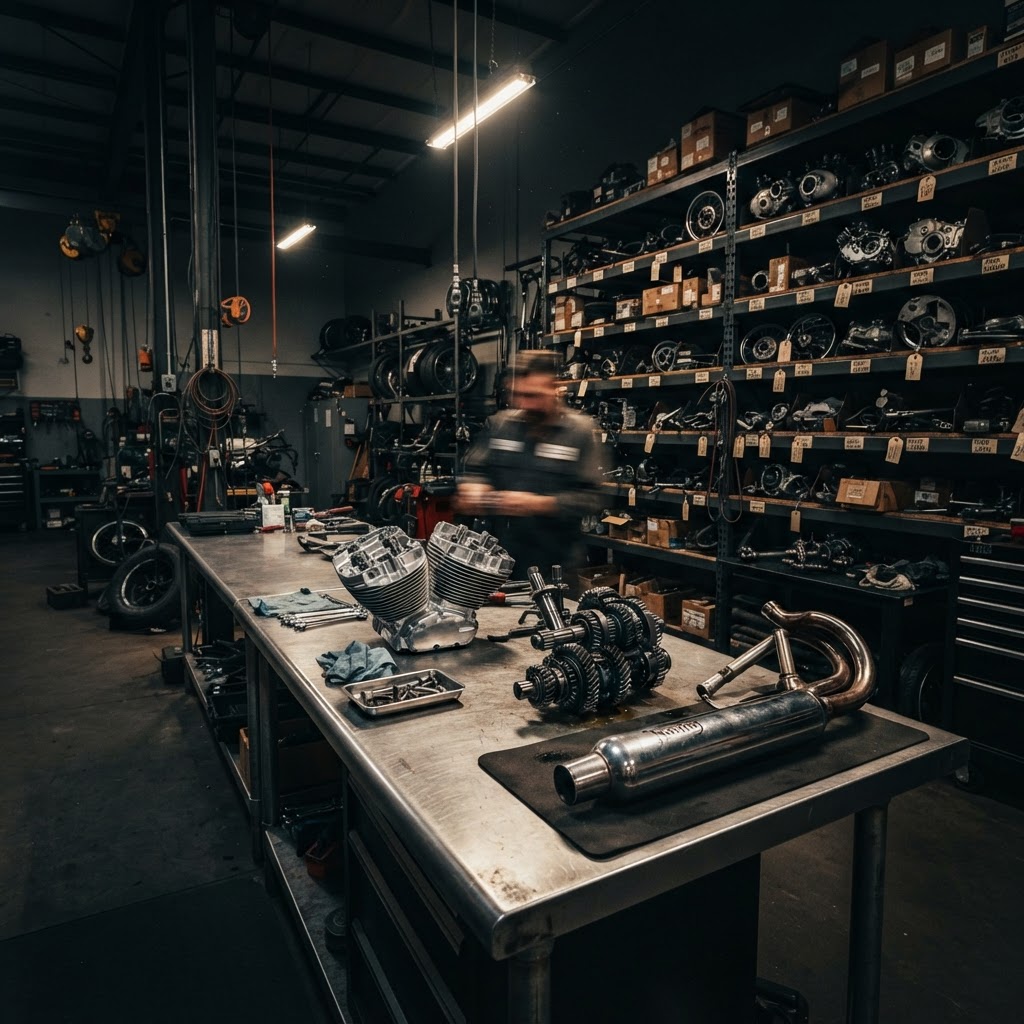
When a crashed or non-running motorcycle enters your salvage yard, your first instinct might be to pull the entire motor, strap it to a pallet, and list it as a complete unit. While selling a complete engine offers a quick turnaround, it is rarely the most profitable strategy. Savvy powersports dismantlers know that the real money lies in tearing down the block and separating it into high-value motorcycle engine parts. A seized bottom end might make a whole engine virtually worthless to a casual buyer, but the pristine cylinder head, the intact transmission gear set, and the flawless stator hidden inside are highly sought after by mechanics and rebuilders worldwide.
However, successfully transitioning from selling whole units to parting out internal components requires a deep understanding of what buyers are looking for, how to evaluate wear and tear, and how to effectively manage your inventory. Managing a massive inventory of dismantled components can be overwhelming, which is why utilizing a dedicated salvage listing tool like RevParts is critical for keeping your warehouse organized and your eBay Motors listings optimized.
In this comprehensive guide, we will break down the economics of engine teardowns, identify the most lucrative internal and external components, and show you exactly how to inspect, clean, and list your inventory. If you are serious about mastering the art of engine parts selling, understanding these nuances will dramatically increase your salvage yard's revenue and reduce your shipping headaches.
The Economics of Engine Teardowns: Why Parting Out Pays
Shipping a complete motorcycle engine is a logistical nightmare. It requires custom palletizing, draining all fluids to comply with hazmat regulations, and arranging expensive LTL (Less Than Truckload) freight shipping. If the buyer receives the engine and discovers a hidden issue—such as a cracked case or a spun bearing—you are suddenly on the hook for massive return freight costs and a severely devalued piece of inventory. The risk-to-reward ratio for selling complete, untested motors is often heavily skewed against the dismantler.
By contrast, dismantling an engine allows you to isolate the damage, discard the useless components, and harvest the high value parts. Smaller components like camshafts, clutch baskets, and stators can be shipped via standard carriers like USPS, UPS, or FedEx. The shipping costs are negligible, the packaging process is straightforward, and the risk of catastrophic return shipping fees is virtually eliminated.
Furthermore, the aggregate value of individual parts almost always exceeds the value of a complete used engine. A buyer might hesitate to pay $800 for an entire motor with unknown mileage, but five different buyers will gladly pay $200 each for the cylinder head, the transmission, the crankcase halves, the stator, and the exhaust system.
Identifying High-Value Motorcycle Engine Parts
Not all engine parts are created equal. Knowing which components to prioritize during a teardown will save you time and maximize your return on investment. Here are the most lucrative categories to focus on when you split the cases.
Cylinder Heads and Valvetrain Components
The cylinder head is often the most valuable component on a modern four-stroke engine. Because heads are highly susceptible to damage from dropped valves, overheating, or timing chain failures, there is a massive secondary market for good, usable replacements.
When pulling a cylinder head, keep the camshafts, cam caps, and valves intact if they are in good condition. Complete, ready-to-bolt-on heads command a premium. Always inspect the cam journals for scoring and the valves for straightness. If the head itself is damaged but the camshafts are pristine, separate them; OEM camshafts are incredibly expensive brand new, making used ones very attractive to buyers.
Transmissions and Gear Sets
Motorcycle transmissions are notoriously complex, and when a rider bends a shift fork or rounds off the engagement dogs on a gear, they often look for a complete used cassette or gear cluster rather than buying individual new gears from the dealer.
When removing a transmission, keep the primary and secondary shafts assembled if possible. Inspect the gear dogs for rounding or heavy pitting. Pay special attention to the shift forks and the shift drum; these are high-wear items that frequently bend under aggressive riding. When you log your parts into RevParts, you can easily track the precise location of that gear cluster in your warehouse, ensuring you never misplace a highly profitable component.
Crankcases and Engine Blocks
Engine cases are frequently damaged by thrown chains, catastrophic internal rod failures, or simple crash impact. Because OEM cases are sold as matched pairs and cost a fortune new, a pristine set of used crankcases is a goldmine.
Always sell crankcases as a matched set, as they are line-bored together at the factory. Mismatched halves will cause binding in the crankshaft and transmission bearings. Carefully inspect the mounting tabs, the oil drain plug threads, and the bearing journals. A stripped drain plug can be repaired, but a cracked engine mount usually renders the case worthless.
Stators, Rotors, and Flywheels
Electrical components housed within the engine covers are highly sought after. Stators frequently burn out, and flywheels can suffer from demagnetization or sheared woodruff keys. Because these parts are critical for the motorcycle's charging and ignition systems, buyers are constantly searching for tested, OEM replacements. Before listing, use a multimeter to test the resistance across the stator coils to ensure it is fully functional.
Exhaust Systems and Mufflers
While technically bolted to the outside of the engine, exhaust components are a major part of the powertrain ecosystem and represent incredible value. Vintage dirt bike exhausts, for example, are highly prized because they are no longer manufactured.
For example, if you are parting out a late-80s enduro, you might pull a 1988 Kawasaki KDX200 Spark Arrestor Muffler. While a complete, non-running KDX200 engine might only fetch a couple hundred dollars if it's seized, this specific exhaust component alone routinely sells for $150 in good condition. By cataloging this in your Transmission and Exhaust categories on RevParts, you immediately push that highly sought-after component to the buyers who need it.
The Teardown Process: Best Practices for Dismantlers
Speed is important in a salvage yard, but tearing down an engine too quickly can result in damaged parts and lost profits. A systematic approach ensures that every component retains its maximum value.
First, thoroughly drain all oil and coolant before opening the engine. Nothing ruins a workspace faster than an unexpected deluge of contaminated motor oil. Use an impact driver to remove stubborn Phillips-head case screws to avoid stripping them.
As you remove components, bag and tag all associated hardware. A clutch basket is worth significantly more if it includes the original mounting nut, washers, and springs. Keep everything organized. This is where your inventory management protocol makes or breaks your business. Using bins with alphanumeric location codes ensures that when an item sells three months later, you can find it in seconds.
Inspecting and Evaluating Condition
Honesty and accuracy are the cornerstones of successful engine parts selling. If you sell a scored camshaft as 'excellent condition,' you will face returns, negative feedback, and a damaged reputation on eBay Motors.
Develop a strict inspection checklist for your teardown technicians:
- Visual Inspection: Look for heat discoloration (bluing) on clutch plates and transmission shafts, which indicates oil starvation.
- Tactile Inspection: Run your fingernail over camshaft lobes and crank journals. If your nail catches on a groove, the part is scored and must be listed as 'for parts or repair' or scrapped.
- Thread Inspection: Check every tapped hole. Stripped spark plug threads in a cylinder head must be explicitly noted in your listing.
- Measurement: Use calipers and micrometers to measure cylinder bore wear and valve clearances if you are selling high-end performance parts.
Taking the time to properly evaluate each part allows you to command top dollar for your pristine components while avoiding costly returns on your defective ones.
Preparing Parts for Sale
A greasy, filthy part will not sell for its true value. Buyers want to see exactly what they are purchasing, and a layer of baked-on sludge hides potential damage and makes the part look neglected.
Invest in a good parts washer and an ultrasonic cleaner. Ultrasonic cleaners are especially effective for carburetors, fuel injectors, and heavily carboned valves. For aluminum crankcases and cylinder heads, vapor honing (wet blasting) can make a 20-year-old part look brand new, allowing you to charge a massive premium.
Once a part is clean, lightly coat steel components (like crankshafts and transmission gears) with a rust inhibitor or lightweight machine oil. Once the protective oil layer is applied, seal the part in heavy-duty plastic shrink wrap or a ziplock bag to prevent flash rusting while it sits in your warehouse.
How to List High-Value Parts for Maximum Return
Having the best motorcycle engine parts in the world means nothing if your listings don't convert. The online marketplace is highly competitive, and your listings need to stand out through superior photography, keyword-rich titles, and comprehensive fitment data.
Photography That Sells
Your photos are your storefront. Never use stock images. Place your clean parts on a well-lit, neutral background (white or light grey works best). Take multiple photos from every angle. For high value parts, include macro shots of critical wear areas. Show the cam lobes, the cylinder walls, and the gear dogs up close. If there is a scratch or a broken fin on a cylinder head, take a clear picture of the damage. Transparency builds trust, and trust drives sales.
Crafting the Perfect Title
An eBay Motors title must be a concentrated dose of SEO. Do not waste space with words like 'L@@K' or 'Awesome.' Instead, use the exact search terms a mechanic would use. A perfect title follows this formula: [Year] [Make] [Model] [Part Name] [OEM Part Number] [Key Fitment Years].
For example: '1988-1994 Kawasaki KDX 200 OEM Spark Arrestor Muffler Exhaust 18010-1065'. This title covers the exact machine, the span of compatible years, the specific part, and the manufacturer part number.
Mastering Fitment Data
Fitment (or compatibility) is the most critical aspect of engine parts selling. A stator from a 2006 Suzuki GSX-R600 might also fit the 2007 GSX-R600 and the 2006-2007 GSX-R750. If you do not include this cross-compatibility in your listing, you are missing out on a massive portion of your potential buyers.
This is where standard listing methods fall short and specialized tools shine. The magic of engine parts selling comes alive when you leverage the RevParts integration with eBay Motors. RevParts automatically maps your parts to the correct eBay Master Vehicle List (ePID) catalogs, ensuring that your transmission gear or cylinder head shows up in search results regardless of which compatible bike the buyer is fixing.
Pricing Strategies for Engine Parts Selling
Pricing used engine components requires a delicate balance. Price too high, and your inventory will collect dust. Price too low, and you leave thousands of dollars on the table over the course of a year.
Start by checking the retail price of the OEM part. As a general rule, a used part in good condition should be priced between 40% and 60% of its new OEM counterpart. However, scarcity changes the math. If an OEM crankcase is backordered or discontinued by the manufacturer, you can often price your used case at 80% to 100% of the original retail value. Vintage parts, like the aforementioned Kawasaki KDX exhaust, follow their own rules based on current collector demand. Always search completed and sold listings on eBay to gauge the true market value of your high-value motorcycle engine parts.
Real-World Case Study: Turning a Seized Engine into Profit
Let’s look at a practical example of how parting out an engine maximizes return. Imagine you acquire a crashed 2015 Yamaha YZ250F. The engine is locked up because the previous owner ran it out of oil, seizing the piston to the cylinder.
Option A: You list the complete locked engine for $400 'as-is, for parts or rebuild.' It sits for six months, requires $150 in freight shipping, and you deal with constant lowball offers.
Option B: You spend two hours tearing the engine down. You discover the bottom end is trashed, but you manage to salvage several high value parts:
- Cylinder Head (valves intact, cams removed): $350
- Intake and Exhaust Camshafts: $150
- Complete Transmission Gear Set: $250
- Clutch Basket and Inner Hub: $125
- Stator and Flywheel: $120
- Left and Right Outer Engine Covers: $100
- Throttle Body (separated from head): $150
By meticulously dismantling the motor and tracking the inventory via RevParts, you have transformed a $400 heavy, unsellable paperweight into $1,245 worth of easily shippable, highly desirable components. Even factoring in the labor cost of the teardown, the profit margin is exponentially higher, and the shipping process is infinitely smoother.
Conclusion: Streamline Your Salvage Business
The powersports salvage industry is highly lucrative for those who understand the intricacies of engine teardowns. By learning how to identify high-value motorcycle engine parts, implementing rigorous cleaning and inspection protocols, and creating highly optimized listings with accurate fitment data, you can dominate the secondary parts market.
However, scaling this process requires the right software. Managing hundreds of unique SKUs, cross-referencing OEM part numbers, and maintaining accurate inventory locations across multiple marketplaces is impossible to do efficiently with spreadsheets alone. You need a platform built specifically for the unique challenges of powersports dismantlers.
Ready to start listing your parts? Sign up free at RevParts → https://revpartspro.com/become-seller
Stay in the loop
Get the latest powersports tips, new parts alerts, and seller guides — straight to your inbox. No spam.