eBay Listing Optimization for Motorcycle Parts: Rank & Convert
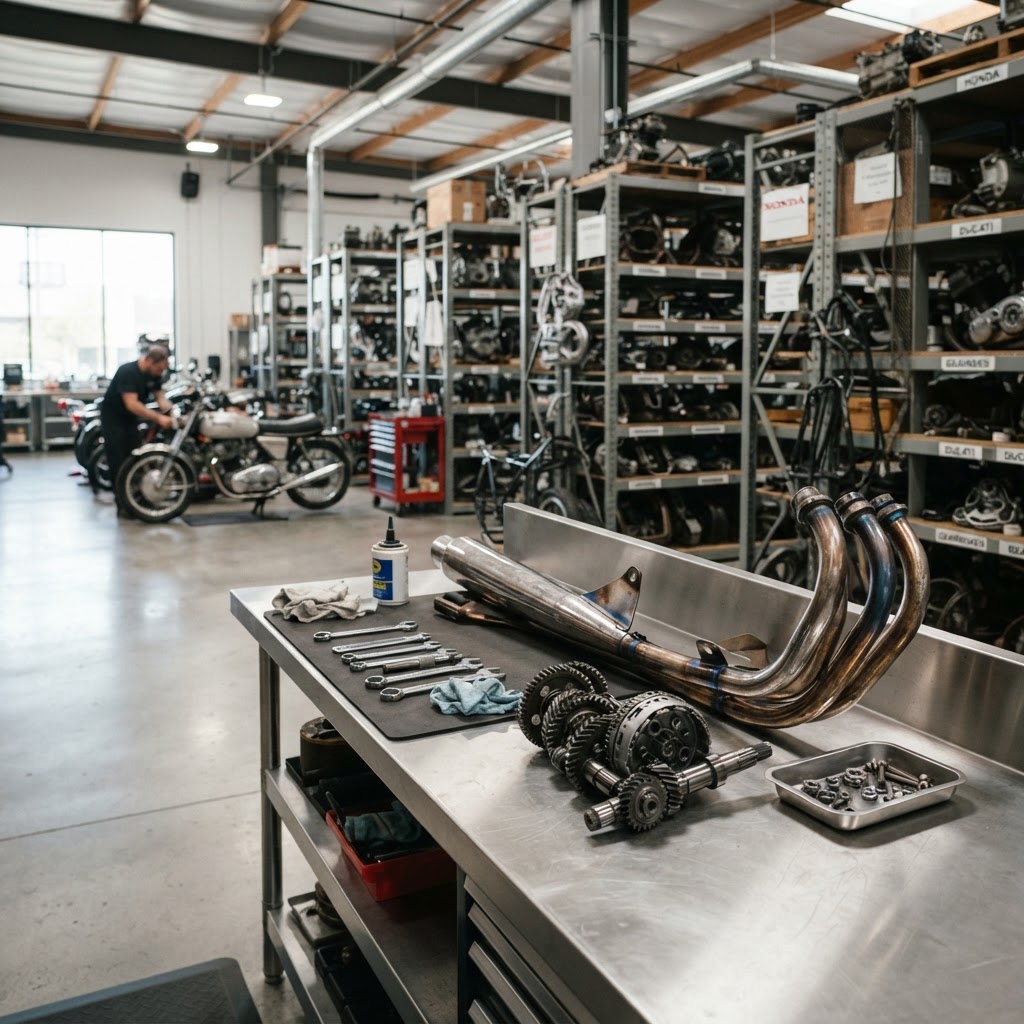
If you are running a powersports salvage yard or dismantling motorcycles for profit, you already know that pulling the parts is only half the battle. You can meticulously strip a bike down to the bare frame, clean every component, and organize your inventory perfectly on the warehouse shelves. But if your online listings are not optimized, those high-value parts are just going to sit there gathering dust. In the highly competitive world of online salvage sales, visibility is everything. This is where eBay listing optimization comes into play, serving as the bridge between your hard work in the shop and a completed sale online.
Selling used motorcycle components requires a different approach than selling t-shirts or consumer electronics. When a rider is looking for a specific transmission gear, an exhaust header, or an engine side cover, they are searching with intent. They need a part that fits their exact year, make, and model, and they need to trust that the piece they are buying is in functional condition. If your motorcycle parts listing lacks the necessary details, exact fitment data, or clear photography, buyers will simply scroll past it to find a seller who provides that peace of mind.
In this comprehensive guide, we will dive deep into the mechanics of eBay SEO. We will explore how eBay's search algorithm works, how to craft titles that capture high-intent traffic, the importance of item specifics, and how to write descriptions that convert browsers into buyers. Whether you are dealing with complex internal engine components like a transmission assembly or bolt-on exterior parts like an exhaust system, mastering these strategies will transform your salvage business. Let us look at how you can dominate the search results and move your inventory faster.
Understanding eBay SEO and the Search Algorithm
Before you can optimize your listings, you need to understand how eBay decides which items to show at the top of the search results. eBay's search engine (historically known as Cassini, though continually evolving) is designed with one primary goal: to show buyers the items they are most likely to purchase. This means that eBay SEO is not just about keyword stuffing; it is about proving to the algorithm that your listing provides value, relevance, and a great buyer experience.
The Core Pillars of Best Match
When a buyer types a query into the eBay search bar, the default sorting method is "Best Match." The algorithm looks at several factors to determine your ranking:
- Relevance: How closely does your title, item specifics, and description match the buyer's search terms?
- Listing Completeness: Did you fill out all the recommended item specifics, or did you skip them?
- Value: Is the item priced competitively compared to similar items? Are the shipping costs reasonable or free?
- Seller Performance: Do you have a history of fast shipping, low defect rates, and positive feedback?
- Engagement: Do buyers click on your listing when it appears in search? Do they buy it, or do they bounce back to the search results?
For a motorcycle parts listing, relevance is the most critical pillar. If a buyer searches for a "1988 Kawasaki KDX200 Exhaust," eBay wants to show them exact matches first. If your listing simply says "Kawasaki Dirt Bike Muffler," the algorithm will bury it. To win at eBay SEO, you must provide the search engine with highly specific, structured data.
Crafting the Perfect Motorcycle Parts Title
Your listing title is arguably the most important element of your eBay listing optimization strategy. eBay gives you 80 characters to tell both the algorithm and the buyer exactly what you are selling. Every single character is prime real estate, and wasting space on unnecessary words is a cardinal sin of salvage selling.
The Golden Formula for Parts Titles
When writing a title for a motorcycle part, structure is key. Buyers typically search using a specific cadence. You should align your titles with their thought process. The ideal formula for a motorcycle parts listing is:
Year + Make + Model + Part Name + Condition/Qualifier + OEM Part Number (if applicable)
Let us break down why this works:
- Year(s): Buyers always start with the year. If the part fits a range (e.g., 86-88), list the primary year of the donor bike, but ensure fitment data covers the rest.
- Make: The manufacturer (Honda, Kawasaki, Yamaha, Harley-Davidson).
- Model: The specific model designation (CBR600RR, KDX200, YZ250F).
- Part Name: Use the common name AND the technical name if space permits (e.g., Muffler / Silencer / Spark Arrestor).
- Condition: Briefly state if it is OEM, Used, or features a specific attribute (e.g., "OEM Used," "Good splines").
- Part Number: Many mechanics search exclusively by the OEM part number. Including this guarantees a hit for high-intent searches.
Title Examples: The Good, the Bad, and the Ugly
- The Bad: "Kawasaki dirtbike exhaust old used." (Why it fails: No year, no specific model, wasted words like "old" and "dirtbike".)
- The Better: "1988 Kawasaki KDX 200 Exhaust Muffler" (Why it is okay: Hits the basic keywords, but leaves room for improvement.)
- The Optimized: "1988 Kawasaki KDX200 OEM Spark Arrestor Muffler Silencer Exhaust 18016-1065" (Why it wins: Uses all 80 characters, includes variations of the part name, states it is OEM, and includes the exact manufacturer part number. This is peak eBay SEO.)
Do not use words like "L@@K," "WOW," or "RARE" in your titles. Buyers do not search for these terms, and they waste valuable character space that could be used for fitment details.
Dominating Item Specifics and Fitment Data
If the title gets you in the general search results, the Item Specifics keep you there when buyers start using filters. In the eBay Motors and parts categories, Item Specifics are absolutely critical. When a buyer searches for a transmission part, they will often use the left-hand sidebar to filter by Brand, Placement on Vehicle, Condition, and Manufacturer Part Number.
The Danger of "Does Not Apply"
One of the biggest mistakes salvage sellers make is rushing through the listing process and typing "Does Not Apply" or "N/A" into the Item Specifics fields. When you do this, your listing is instantly excluded the moment a buyer applies a filter. If a buyer clicks the "Kawasaki" brand filter, and your brand is set to "N/A," your listing disappears, even if the word Kawasaki is in your title.
Maximizing Compatibility (Fitment)
The real secret weapon in eBay listing optimization for parts is the Compatibility (Fitment) table. A part pulled from a 1988 Kawasaki KDX200 might fit the 1986, 1987, and 1989 models as well. If you only list 1988 in the title and fail to fill out the fitment table, you are missing out on 75% of your potential market.
Manually researching and entering cross-compatibility for every single gear, exhaust pipe, and bracket is incredibly time-consuming. This is exactly where specialized software changes the game. Using a platform like RevParts allows you to automatically pull OEM fitment data. When you identify the donor bike, RevParts instantly populates the eBay compatibility table, ensuring your motorcycle parts listing shows up for every single applicable year and model without requiring hours of manual research.
Writing Descriptions That Sell (and Protect You)
Many sellers mistakenly believe that buyers do not read descriptions. While it is true that modern buyers skim, mechanics and riders spending $150 on a vintage spark arrestor or $400 on a complete transmission assembly absolutely read the details. They want to know exactly what they are getting.
Your description serves two main purposes: converting the buyer by instilling confidence, and protecting you as a seller in the event of a dispute or return request.
The Anatomy of a High-Converting Description
To maximize your eBay SEO and buyer conversion rate, structure your description clearly using bullet points. Mobile buyers make up over 60% of eBay traffic, and massive walls of text are impossible to read on a smartphone screen.
Include the following sections in your description:
- Part Identification: Reiterate the exact part name, OEM part number, and the donor vehicle it was removed from.
- Exact Condition: Be brutally honest. If you are selling an exhaust with a dent, mention the dent. If you are selling a transmission shaft, mention the condition of the splines and gear dogs. Transparency prevents returns. Use phrases like: "This is a used OEM part. It shows normal signs of wear including light surface rust and scratches, but is fully functional. Please see photos for exact condition."
- Donor Vehicle Details: Mileage (if known), year, make, and model of the bike the part was pulled from. This adds authenticity and trust.
- Fitment Disclaimer: While you should provide fitment data, always add a disclaimer reminding the buyer to verify fitment for their specific machine before purchasing.
- Shipping and Return Policy: Briefly restate your handling time and return policy to reassure the buyer.
Using a tool like RevParts, you can create dynamic description templates that automatically inject the part's condition, donor bike specs, and your custom shop policies into every listing, saving you from typing the same information hundreds of times a day.
The Power of Professional, Transparent Photography
In the salvage business, your photos are your showroom. You are selling dirty, used, imperfect parts. The worst thing you can do is try to hide the flaws with blurry photos or bad lighting. eBay allows up to 24 photos per listing for free—use as many as you need to tell the whole story.
Best Practices for Motorcycle Salvage Photography
- Lighting is Everything: You do not need a fancy DSLR camera; a modern smartphone is perfect. However, you do need good lighting. Set up a dedicated photo station in your warehouse with bright, diffused LED shop lights to eliminate harsh shadows.
- Clean Backgrounds: Shoot your parts on a clean, solid background. A simple white table, a clean piece of diamond plate, or a specialized photo booth works wonders. A messy workbench in the background looks unprofessional and distracts the buyer.
- The 360-Degree Rule: Photograph the part from every conceivable angle. If it is an exhaust, get wide shots of the whole pipe, close-ups of the mounting brackets, the inlet, the outlet, and any stamped part numbers.
- Highlight the Damage: If there is a scuff, a dent, or a crack, take a clear close-up of it. Point to it with a pen if necessary. Buyers respect honesty. When they know exactly what the flaw is, they are more comfortable buying. Hidden flaws lead to "Item Not As Described" returns, which severely damage your eBay SEO metrics.
- Show the Details that Matter: For a transmission assembly, mechanics want to see the condition of the gear dogs and the splines. Make sure your macro (close-up) shots of these critical wear areas are crystal clear.
Strategic Pricing and Fast Shipping
Your eBay listing optimization efforts will fall flat if your pricing and shipping strategies are not aligned with market expectations. Value is a massive component of the Best Match algorithm.
Competitive Pricing
Pricing salvage parts is an art. You do not always have to be the cheapest seller, but you must be competitive based on the condition of your part. If your 1988 Kawasaki KDX200 muffler is heavily dented, you cannot price it the same as a pristine, dent-free version. Research completed and sold listings to see what buyers are actually paying, not just what other sellers are asking.
The Need for Speed (and Free Shipping)
eBay heavily favors listings that offer fast, free shipping. While offering free shipping on heavy, bulky items like a motorcycle engine or a full exhaust system can be terrifying for margins, you should strongly consider incorporating the average shipping cost into the item price.
If free shipping is not feasible, ensure you are using calculated shipping with accurate weights and dimensions. Fast handling time is non-negotiable. Aim for 1-day handling. Riders whose bikes are broken down want their parts yesterday. If you offer fast handling and expedited shipping options, your conversion rate will skyrocket.
Case Study: Turning a Shelf Warmer into a Fast Mover
Let us look at a real-world application of these strategies using a specific inventory item: an exhaust component for a vintage dirt bike.
The Scenario: A salvage seller had a muffler sitting on the shelf for eight months. The original listing title was: "Kawasaki KDX Exhaust Used." It had three dark, blurry photos taken on a dirty shop floor. The description simply read: "Used exhaust pulled from a KDX. See pics." It was priced at $150, which was fair for the market, but the listing had zero watchers and barely any views.
The Optimization: Recognizing the failure of the listing, the seller decided to overhaul it using a structured eBay listing optimization approach.
- Title Rewrite: The seller changed the title to: "1988 Kawasaki KDX200 OEM Spark Arrestor Muffler Silencer Exhaust 18016-1065"
- Photography: The part was wiped down with degreaser and taken to a well-lit photo booth. The seller took 12 photos, including wide shots, close-ups of the mounting tabs, a clear shot of the OEM stamping "18016-1065," and an honest close-up of a small dent on the backside.
- Item Specifics & Fitment: Using their listing tool, the seller fully populated the brand (Kawasaki), material (Steel), placement on vehicle (Rear), and pulled the exact fitment data showing it fit multiple years of the KDX200.
- Description Update: A bulleted description was added detailing the exact condition, the donor bike (1988 KDX200), and confirming the spark arrestor screen was intact.
The Result: Within 48 hours of updating the motorcycle parts listing, the item saw a 400% increase in impressions. On day four, a buyer actively restoring a vintage KDX searched specifically for the part number "18016-1065." Because the title was optimized and the fitment data was correct, the listing ranked #1 in search. The buyer saw the honest photos of the dent, appreciated the transparency, and paid the full $150 asking price.
This is the tangible power of mastering eBay SEO.
Streamlining Your Salvage Business Operations
Implementing these strategies manually for every single part you pull from a donor bike is daunting. When you are tearing down five bikes a week, you might be generating hundreds of individual parts. Writing custom titles, researching part numbers, finding cross-compatibility, and formatting descriptions for each item by hand creates a massive bottleneck in your operations.
Time is money in the dismantler business. The longer it takes to list a part, the longer your capital is tied up in unlisted inventory. To truly scale, you need to automate the tedious aspects of eBay listing optimization while retaining the high quality that the search algorithm demands.
This is why modern salvage yards rely on specialized software. By utilizing RevParts, you can dramatically accelerate your workflow. RevParts is built specifically for powersports and auto dismantlers. It allows you to decode a donor vehicle, automatically pull OEM part numbers, instantly generate fitment compatibility charts, and push perfectly optimized, structured listings directly to eBay Motors.
Instead of guessing what a part is called or spending twenty minutes researching which years a specific transmission gear fits, RevParts does the heavy lifting. It ensures your Item Specifics are perfectly filled out so you never fall victim to the "Does Not Apply" filter trap. It gives you the power to list parts 10x faster while actually improving your eBay SEO.
Conclusion: Rev Up Your Sales
Mastering eBay listing optimization is not a one-time trick; it is a fundamental business process that separates struggling salvage yards from highly profitable dismantlers. By understanding how the eBay algorithm rewards relevance and completeness, you can craft titles that target exact buyer intent. By providing crystal-clear photography, honest descriptions, and leveraging comprehensive fitment data, you build trust and drive conversions.
Remember, your inventory is only as valuable as its online visibility. A beautifully cleaned OEM transmission sitting on a shelf makes you zero dollars. An optimized motorcycle parts listing dominating the top of eBay search results generates revenue.
Stop letting your valuable inventory sit unseen due to poor listing practices. Equip your business with the tools designed to help dismantlers win the online marketplace.
Ready to start listing your parts? Sign up free at RevParts → https://revpartspro.com/become-seller
Stay in the loop
Get the latest powersports tips, new parts alerts, and seller guides — straight to your inbox. No spam.