How to Price Used ATV & Motorcycle Parts for Max Profit
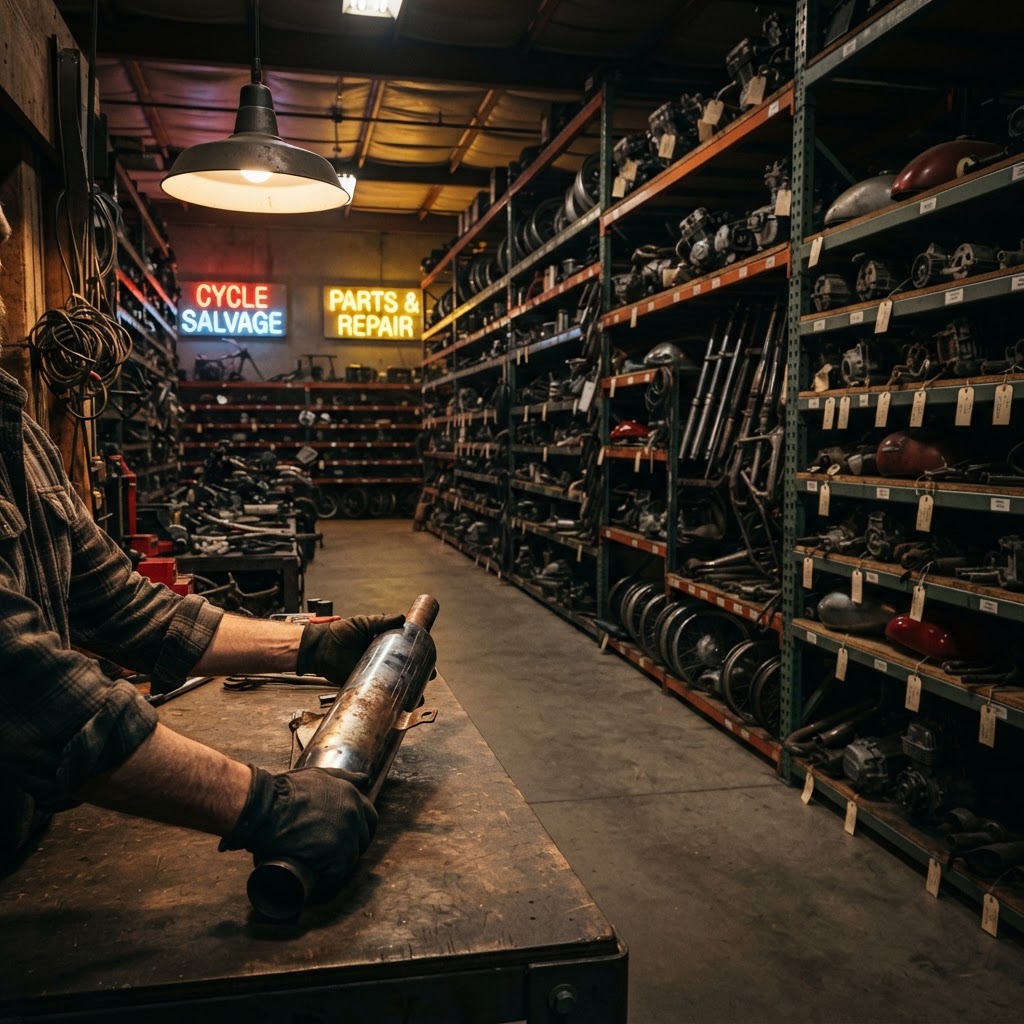
Every experienced dismantler and salvage yard operator knows the feeling. You have just dragged a crashed, seized, or mechanically totaled powersports vehicle into the shop. The teardown process is usually the easy part—a few hours with air tools, and that once-proud machine is neatly reduced to an array of components spread across your workbench. But the real challenge—the one that directly dictates whether your salvage operation stays in the black or drowns in unsold, rusting inventory—is figuring out exactly how to price used parts to maximize profit without turning your warehouse into a permanent museum.
Pricing powersports salvage isn't a guessing game. It is a highly specific discipline that balances market demand, part condition, seasonal trends, and exact fitment data. If you price your inventory too high, your cash flow stagnates as parts sit on shelves for years collecting dust. If you price them too low, you are leaving thousands of dollars of potential revenue on the table, undermining the hard work of your dismantling team.
Whether you are parting out a vintage dirt bike, a modern sportbike, or a heavily abused utility quad, establishing a standardized, data-driven pricing strategy is the key to scaling your business. In this comprehensive guide, we will dive deep into the exact methodologies, industry secrets, and advanced tactics you need to master ATV parts pricing and motorcycle parts valuation so you can dominate eBay Motors and other major online marketplaces.
The Core Principles of Motorcycle Parts Valuation
When you price used parts in the powersports industry, you have to throw out much of what you might know about automotive salvage. Cars are utilitarian appliances for most people; motorcycles and ATVs are passion purchases, race machines, or specialized agricultural tools. This fundamentally changes the psychology of the buyer and the valuation of the components.
Condition is King, but Rarity is Queen
In motorcycle parts valuation, cosmetic condition often dictates price just as much as mechanical integrity. A buyer looking for a replacement fuel tank for a 2015 Harley-Davidson is not just looking for a vessel to hold gasoline—they are looking for a flawless paint match. Therefore, a pristine OEM tank can command 70% to 80% of its original retail price, while a deeply scratched or dented tank might only fetch 20% of retail, appealing only to custom builders or stunt riders who plan to repaint or wrap it anyway.
However, rarity can trump condition. If you are dealing with discontinued, "No Longer Available" (NLA) parts, buyers will accept significant wear and tear simply because they have no other options. Understanding whether a part is still available from the manufacturer is the first crucial step in motorcycle parts valuation.
The OEM vs. Aftermarket Divide
Salvage buyers overwhelmingly prefer OEM (Original Equipment Manufacturer) parts over cheap aftermarket alternatives. When you price used parts, you must identify if the component you pulled is factory original or a third-party replacement. High-end aftermarket parts (like Akrapovič exhausts, Öhlins suspension, or Rekluse clutches) hold incredible resale value and should be priced at a premium. Conversely, cheap, generic aftermarket turn signals or unbranded Chinese carburetors are often not worth the labor it takes to list them, let alone the shipping costs.
Mastering ATV Parts Pricing Strategies
ATV parts pricing requires a slightly different approach than street bikes. All-Terrain Vehicles are designed to be abused. They are driven through mud, submerged in creeks, rolled down hills, and used to haul heavy loads on farms. Because of this, the wear and tear on ATV components is inherently more severe, and buyers expect parts to reflect that reality.
The "Off-Road Factor" in Grading and Pricing
When determining ATV parts pricing, you have to look closely at categories that take the most abuse: drivetrain, suspension, and electrical. A transmission from a sport quad that has been raced on motocross tracks will have different internal wear than a transmission from a utility ATV used for plowing snow.
When listing ATV parts, transparency about the donor vehicle's life (if known) and extreme detailing in your photos will allow you to price at the top of the market. Buyers are willing to pay a premium for used ATV axles, differentials, and stators if they are meticulously cleaned, tested, and guaranteed to work. If you list a part caked in mud with a blurry photo, you will have to price it at rock bottom to get a sale.
Seasonality and Timing Your Market
ATV parts pricing is highly susceptible to seasonal fluctuations. If you are dismantling a 4x4 utility quad, parts like plows, winches, four-wheel-drive actuators, and aggressively treaded tires will see a massive spike in demand (and thus, higher price ceilings) in late autumn and early winter. Conversely, sport quad parts (like high-performance exhaust systems, extended A-arms, and racing shocks) will fetch maximum profit in the spring as riders prep for the summer riding season. Smart dismantlers hold highly seasonal inventory and list it exactly when demand peaks, maximizing their margins.
How to Research and Price Used Parts on eBay Motors
eBay Motors is the largest powersports parts marketplace in the world. It is the ultimate barometer for what a part is actually worth. However, many novice sellers make critical errors when using eBay to establish their baseline prices.
Step 1: Ignore "Active" Listings, Analyze "Sold" Listings
One of the most common mistakes dismantlers make is searching for a part, seeing what other sellers are asking for it, and pricing their part slightly lower. Active listings represent what sellers hope to get, not what buyers are actually willing to pay. To accurately price used parts, you must filter your eBay search to "Sold Items" and "Completed Items." Look at the last 90 days of transaction history. This gives you the true market value. If an active listing has been sitting at $200 for a year, but the last five sold listings closed at $120, your market value is $120.
Step 2: Factor in the "Free Shipping" Illusion
When looking at sold data to determine your motorcycle parts valuation, you must account for shipping strategies. If a competitor sold a heavy transmission for $300 with "Free Shipping," they likely netted around $220 after freight costs. If you price your transmission at $300 but charge $80 for calculated shipping on top of that, your total buyer cost is $380, and you will lose the sale. Always reverse-engineer the competitor's shipping strategy to understand the true baseline value of the item.
Step 3: Establish a Grading System
To price used parts systematically, implement a grading system (A, B, C) in your warehouse.
- Grade A: Excellent condition, highly clean, tested, low mileage. Price at the top 10% of the completed sold listings.
- Grade B: Average condition, normal wear and tear, fully functional. Price at the median of the completed sold listings.
- Grade C: Rough condition, needs rebuilding, cosmetic damage but usable. Price at the bottom 20% to move it quickly and recoup labor costs.
Advanced Pricing Models for Maximum Profit
Once you master the basics of ATV parts pricing and motorcycle valuation, you can begin to implement advanced pricing models to scale your profits and increase your sell-through rate.
The 50% Rule (And Exactly When to Break It)
A long-standing rule of thumb in the salvage industry is the "50% Rule"—pricing a used, good-condition OEM part at exactly 50% of its brand-new MSRP. This is a fantastic starting point for active, modern powersports vehicles where parts are readily available from the dealership. Buyers generally feel that a 50% discount justifies the risk of buying used.
However, you must know when to break this rule. You should charge 70% to 80% of MSRP if the part is currently on a national backorder from the manufacturer. If a rider's bike is sitting in a shop waiting for a stator that won't be available from the factory for six months, they will gladly pay a premium for your used part to get back on the road today.
Leveraging Cross-Compatibility and Interchange Data
The true secret to maximizing motorcycle parts valuation is understanding interchangeability. A starter motor might have been pulled from a 2008 Suzuki GSX-R600, but that exact same part number might fit the GSX-R750 from 2006 to 2010. If you only list it as a "2008 GSX-R600 Starter," you are limiting your buyer pool. By using software that automatically populates interchange data, your part suddenly fits a dozen different models across a five-year span. A larger buyer pool means higher demand, which allows you to command a higher price.
This is where having a dedicated tool makes a massive difference. Using a dedicated powersports marketplace and listing tool like RevParts can automate much of this research. RevParts specializes in powersports fitment, instantly pulling the interchange data you need to justify higher prices and reach more buyers.
Mini Case Study: 1988 Kawasaki KDX200 Spark Arrestor Muffler
Let's look at a real-world example from the RevParts ecosystem to illustrate how to accurately price used parts when dealing with vintage inventory.
Imagine you are tearing down a heavily worn 1988 Kawasaki KDX200. You pull the exhaust system and isolate the spark arrestor muffler. By modern standards, it looks dated and rugged. If you treat it like a standard dirt bike muffler, you might throw a $40 price tag on it, assuming it's just old junk.
However, proper motorcycle parts valuation tells a different story. This is a vintage enduro machine with a massive cult following among restorers and vintage racers. More importantly, this specific OEM spark arrestor is strictly NLA (No Longer Available) from Kawasaki. Aftermarket companies no longer produce bolt-on replacements for this specific model year.
Because of its scarcity, structural integrity (the arrestor baffles are fully intact), and lack of rust-through, a live listing for this exact 1988 Kawasaki KDX200 Spark Arrestor Muffler is successfully priced at $150.
Why $150? Because the seller realized they aren't just selling a piece of metal; they are selling the missing puzzle piece to someone's $4,000 vintage restoration project. By utilizing RevParts to cross-reference historical data and immediately identify the part as discontinued, the seller recognized the premium value of their exhaust category inventory and priced it for maximum profit rather than a quick, undervalued flip.
Automating and Scaling Your Salvage Operation
Manually researching every single bolt, bracket, and fairing is impossible if you are dismantling multiple units a week. To scale a profitable salvage yard, you have to move away from spreadsheet-based manual pricing and start using modern software.
The Pitfalls of Manual Pricing
If your teardown technician has to stop, pull out a phone, open eBay, search for completed listings, calculate shipping, and guess a price for all 150 parts on a single ATV, your labor costs will completely eat your profit margins. Manual ATV parts pricing leads to bottlenecks in your listing department. Parts sit on carts instead of on shelves, and unlisted inventory is essentially zero-dollar inventory.
The RevParts Advantage
This is exactly where the RevParts platform transforms a salvage business. Built specifically for powersports dismantlers, RevParts acts as your central inventory management system and multi-channel listing tool.
When you pull a transmission or an exhaust system, RevParts allows you to quickly identify the part, automatically assigns the crucial fitment data, and helps you push that listing directly to eBay Motors and your own custom storefront. With the RevParts platform, you can instantly syndicate your inventory across the web, ensuring that your perfectly priced parts are seen by millions of highly targeted powersports enthusiasts. It takes the guesswork out of how to price used parts by keeping your inventory organized, your fitment accurate, and your listings optimized for search engines.
Common Pricing Mistakes Dismantlers Make
Even with great tools and solid market knowledge, sellers still fall into a few predictable traps that destroy their profit margins. Avoid these three critical errors:
1. The Race to the Bottom
Never engage in a pricing war to be the absolute cheapest listing on eBay. If a competitor drops their price by $10, do not blindly drop yours by $15. Buyers of powersports parts are often highly suspicious of the cheapest option. They assume the part is damaged, untested, or being sold by a scammer. Price your parts fairly based on their actual condition. In our RevParts ecosystem, we see sellers consistently win sales at higher price points simply because they provide better photos and detailed descriptions.
2. Ignoring the Value of Small Components
Many dismantlers throw away the hardware—bolts, brackets, springs, and clips—thinking they aren't worth the time to list. This is a massive mistake. A complete set of OEM engine mounting bolts for a Yamaha YZF-R1 can easily sell for $40 to $60 because buyers hate piecing together hardware from the hardware store. Bundle these small items and price them as "Complete OEM Hardware Kits." This is pure profit that most yards toss in the scrap bin.
3. Poor Photography Ruining Perceived Value
You can have the most accurate motorcycle parts valuation in the world, but if your photos look like they were taken in a dark cave with a potato, you will never get your asking price. Perceived value is heavily tied to visual presentation. Take the time to wipe off heavy grease. Use a dedicated photo booth with bright, neutral lighting. Take photos from all angles, and specifically highlight any scratches or damage. A clean part with honest, high-quality photos can easily be priced 15% higher than a dirty part with poor photos, and it will still sell faster.
Conclusion: Maximize Your Salvage Margins Today
Learning how to price used parts effectively is a continuous journey. The powersports market is dynamic; trends shift, older bikes become vintage classics, and new models provide fresh inventory for the salvage ecosystem. By mastering motorcycle parts valuation, understanding the rugged nature of ATV parts pricing, avoiding the race to the bottom, and leveraging powerful cross-compatibility data, you can turn your dismantle operation into a highly profitable, scalable business.
Don't let valuable inventory sit in your warehouse because of pricing anxiety or listing bottlenecks. By leveraging RevParts' bulk listing features and specialized powersports tools, you can list faster, price smarter, and reach a massive audience of eager buyers on eBay Motors and beyond.
Ready to start listing your parts? Sign up free at RevParts → https://revpartspro.com/become-seller
Stay in the loop
Get the latest powersports tips, new parts alerts, and seller guides — straight to your inbox. No spam.