Selling High-Value Motorcycle Engine Parts for Maximum Return
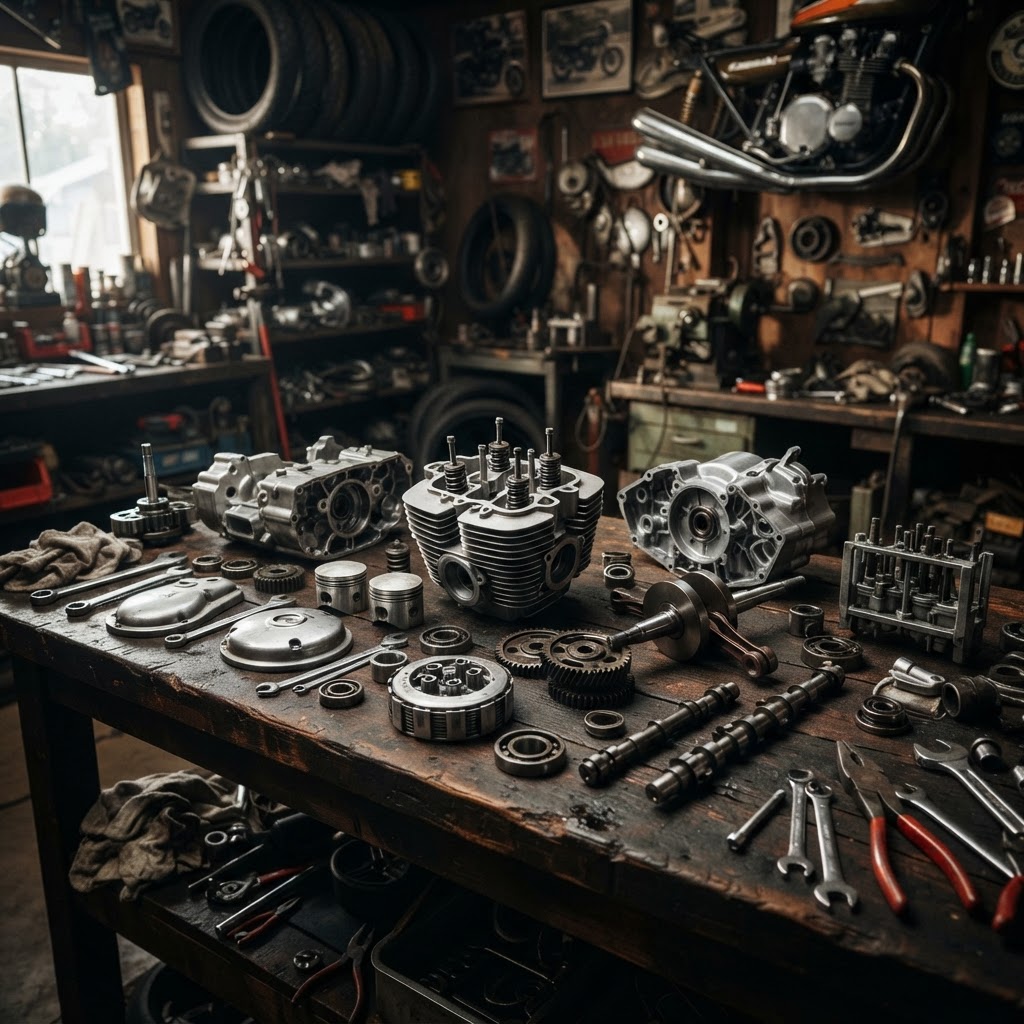
Every motorcycle salvage yard or dismantling operation faces the same fundamental challenge: how to maximize the return on every single unit that rolls through the shop doors. When you acquire a wrecked, non-running, or salvage-title bike, the immediate instinct is to look at the fairings, the frame, or the electronics. However, seasoned dismantlers know that the real treasure trove lies within the powertrain. Breaking down a powertrain to harvest motorcycle engine parts is one of the most reliable ways to turn a seemingly dead investment into a highly profitable venture.
Engine parts selling isn't just about unbolting pieces and throwing them online. It is a nuanced process that requires a sharp eye, mechanical knowledge, and a streamlined listing strategy. If you do it right, a blown motor can still yield hundreds—or even thousands—of dollars in high value parts. The difference between average salvage yards and top-tier operations lies in their ability to identify, inspect, prep, and list these components efficiently.
In this comprehensive guide, we will dive deep into the world of motorcycle engine parts. We will explore exactly which components command the highest prices, how to evaluate their condition, the best practices for listing them to ensure a quick sale, and how to safely ship heavy components. Whether you are dealing with a vintage dirt bike or a modern sportbike, understanding the market for high value parts is your key to thriving in the powersports salvage industry.
The Anatomy of Profit: Identifying High-Value Parts
When a motorcycle engine comes across your bench, it can be tempting to sell it whole. While complete, running engines certainly command a premium, engines with blown bottom ends, seized pistons, or cracked cases are far from worthless. In fact, parting them out often yields a higher total return. The secret to successful engine parts selling is knowing exactly which components to target. Here is a breakdown of the high value parts you should always be looking for when tearing down a motor.
Cylinder Heads and Camshaft Assemblies
The cylinder head is often the crown jewel of motorcycle engine parts. Even if the lower end of the engine is completely destroyed, the head might be in perfect working order. Buyers frequently seek replacement heads due to dropped valves, stripped spark plug threads, or warped mating surfaces from overheating.
When stripping an engine, pay close attention to the camshafts, cam caps, valves, and springs. Intact cam lobes with no pitting or scoring are highly desirable. Complete cylinder head assemblies that are ready to bolt on will always be high value parts. Always keep the cam caps matched to their original positions, as they are line-bored from the factory and cannot be mixed and matched. Selling a cylinder head without its original, matched cam caps drastically reduces its value and usability.
Crankcases and Engine Blocks
A set of good crankcases is incredibly valuable. Riders who have thrown a rod through their engine block or suffered from severe chain slap damage are desperate for intact cases. In the world of engine parts selling, matched case halves are a big ticket item. Never sell case halves separately; they are machined together and must stay together. Clean, crack-free cases with intact bearing journals and no stripped drain plug threads can easily fetch hundreds of dollars, making them some of the most reliable high value parts in your inventory.
Transmission Components and Gearsets
Motorcycle transmissions take a beating, especially in dirt bikes, race bikes, and ATVs. Worn gear dogs, bent shift forks, and chipped teeth are common failures that send riders searching the used market. Complete transmission clusters (input and output shafts with all gears) are excellent high value parts. Alternatively, if a specific gear is known to fail on a particular model, separating the transmission and selling the good gears individually can maximize your return. Don't forget the shift drum and shift forks—these are critical motorcycle engine parts that frequently sell quickly.
Stators, Flywheels, and Rotors
While technically crossing into the electrical category, the stator and flywheel (or rotor) live inside the engine covers and are vital motorcycle engine parts. Stators frequently burn out from excessive heat, and flywheels can lose their magnetism or suffer damage to the starter clutch mounting points. An OEM stator in good condition is almost always preferred over a cheap aftermarket replacement, making it a fast-moving item in your engine parts selling strategy.
Clutch Baskets and Inner Hubs
Clutches are wear items, but the hard parts holding the friction plates—the outer clutch basket and inner hub—often suffer from severe grooving over time. A clutch basket with smooth, un-grooved fingers is a fantastic find. Buyers rebuilding their drivelines are constantly hunting for good-condition OEM clutch baskets, cementing their status as essential high value parts.
The Assessment Phase: Condition is Everything
Identifying high value parts is only the first step. The true test of a professional dismantler is accurately assessing the condition of those motorcycle engine parts. Buyers of internal engine components are taking a risk; your job is to mitigate that risk by being thorough, transparent, and precise in your evaluation.
Visual Inspection and Cleaning
Before you can assess anything, the part must be clean. Engine parts selling requires presenting components in a way that inspires buyer confidence. A cylinder head covered in carbon buildup and sludge hides cracks and pitting. Use a parts washer, ultrasonic cleaner, or simple degreaser to clean your high value parts before inspection.
Once clean, perform a meticulous visual inspection. Look for:
- Hairline cracks around bolt holes, engine mounts, and water jackets.
- Scoring or grooving on bearing surfaces (cam journals, crank journals).
- Pitting or blueing from excessive heat on gear teeth or shift forks.
- Stripped threads, especially on drain plugs, case bolts, and spark plug holes.
Measuring Tolerances
To truly excel in engine parts selling and command top dollar, you need to go beyond visual checks. Using micrometers, calipers, and feeler gauges to measure tolerances turns a gamble into a guaranteed sale.
- Cylinders: Check for out-of-roundness and measure the bore diameter. Is the factory Nikasil plating intact, or is it flaking off?
- Crankshafts: Measure connecting rod side clearance and check for up-and-down play.
- Valves: Check valve clearance if selling a complete head, or inspect the valve seats for proper sealing by doing a liquid leak-down test.
Documenting these measurements in your listing proves to the buyer that they are purchasing premium, high value parts from a knowledgeable source, rather than a hobbyist operating out of a dark garage.
The Art of Pricing Motorcycle Engine Parts
Pricing motorcycle engine parts can be a delicate balancing act. Price too high, and the part sits on your shelf collecting dust, tying up your capital and warehouse space. Price too low, and you leave significant money on the table. Effective engine parts selling requires a strategic approach to pricing your high value parts.
Researching Historical Sales Data
Never base your prices solely on current active listings. Anybody can list a cracked crankcase for $500; that doesn't mean it will sell. The golden rule of engine parts selling is to check the "Sold Items" or "Completed Listings" on eBay Motors and other marketplaces. This gives you the true, verified market value of the component.
Understanding Supply and Demand Dynamics
The value of motorcycle engine parts fluctuates based on the time of year, the specific model's failure rate, and overall supply. For example, the intake valves on certain early 2000s motocross bikes were notoriously soft and wore out quickly. Consequently, good condition OEM cylinder heads for those specific models are incredibly scarce and command a massive premium. Recognizing these model-specific quirks allows you to identify hidden high value parts that other salvage yards might overlook.
Leveraging Software for Pricing Intelligence
Pricing hundreds of parts manually is incredibly tedious and prone to error. This is where modern salvage operations turn to software. RevParts provides integrated tools that help you assess market value and set competitive prices efficiently. By utilizing a system designed specifically for the powersports industry, you can streamline your engine parts selling process and ensure your high value parts are priced to move while maximizing profit margins.
Photography That Sells Engine Components
In the world of online engine parts selling, your photos are your digital storefront. A buyer cannot physically inspect the cam journals, check the cylinder bore with their fingernail, or feel the gear dogs, so they must rely entirely on your imagery. High-quality photography is non-negotiable when dealing with high value parts.
Lighting and Background
Never photograph motorcycle engine parts on a dirty workbench or a greasy shop floor. Use a dedicated photo booth or a clean, solid-colored background (white or light grey works best). Ensure the area is well-lit with bright, diffuse lighting to eliminate harsh shadows. The goal is to make the part look professional, clean, and ready to install immediately.
Angles and Details
When photographing high value parts, more is always better. A typical listing should include:
- A wide shot showing the entire component from multiple angles (top, bottom, front, back, sides).
- Extreme close-ups of critical wear areas (e.g., cam lobes, bearing journals, cylinder walls).
- Clear shots of any part numbers, casting marks, or manufacturer logos.
- Detailed photos of any damage, wear, or imperfections.
Complete Transparency
Never try to hide a defect in your photos. If a cylinder head has a broken exhaust stud, photograph it clearly and point it out. In engine parts selling, transparency builds trust. Buyers are often willing to purchase motorcycle engine parts with minor, repairable defects if they are fully aware of them upfront. Hiding damage only leads to returns, negative feedback, and wasted time. Organizing these photos and attaching them to the right inventory SKU is seamless with RevParts, which allows you to snap and upload photos directly to your listing database from your mobile device or tablet.
Writing Listings That Convert
You have identified your high value parts, inspected them, and taken excellent photos. Now you need to write a listing that gets found by search engines and convinces the customer to hit the "Buy It Now" button. Writing optimized listings is the backbone of successful engine parts selling.
Crafting the Perfect Title
Your title must be packed with relevant keywords. The anatomy of a perfect title for motorcycle engine parts should include: [Year] [Make] [Model] [OEM Part Name] [Condition/Details] [Part Number]
Example: "2015 Yamaha YZF-R6 OEM Cylinder Head Assembly Complete Valves Cams 13S-11101-00"
Avoid using filler words like "L@@K" or "AWESOME". Stick to the terms a mechanic would actually type into a search bar when looking for high value parts.
The Description: Be the Mechanic
The description is where you close the sale. Write your descriptions as if you are a mechanic explaining the part to another mechanic.
- Condition: State clearly whether the part is tested, working, or needs repair.
- Measurements: Include any tolerances you measured during the inspection phase.
- Donor Vehicle Info: Mention the year, make, model, and mileage (if known) of the bike the part was pulled from.
- What's Included: Specify exactly what comes with the purchase. If you are selling a crankcase, does it include the main bearings and case bolts?
Perfecting Fitment Data
Fitment (or compatibility) is the most critical aspect of engine parts selling. A stator from a 2010 model might fit models from 2008 all the way to 2015. If you don't list all compatible years and models, you are missing out on potential buyers. RevParts offers built-in fitment data and catalog integrations that automatically populate compatibility charts for your listings. This ensures your high value parts appear in searches for every compatible motorcycle, massively increasing your exposure and sales velocity.
Proper Packaging and Shipping for Heavy Engine Parts
Once your engine parts selling strategy has worked and the item is sold, the final hurdle is getting it to the buyer safely. High value parts are often heavy, awkwardly shaped, and surprisingly fragile. A dropped package can bend a shift shaft, snap off a mounting tab on a crankcase, or damage the delicate mating surface of a cylinder head.
Choosing the Right Materials
Never ship heavy motorcycle engine parts in a thin, single-wall cardboard box. Use double-wall corrugated boxes for anything over 15 pounds. Heavy components will easily punch through standard boxes during transit. For exceptionally heavy items like complete lower ends, consider using custom wooden crates or reinforcing the box with heavy-duty foam board.
Securing Internal Components
Movement is the enemy. Wrap your high value parts in multiple layers of heavy-duty bubble wrap. Fill all void spaces in the box with tightly packed kraft paper or expanding foam packets. Avoid packing peanuts, as heavy motorcycle engine parts will simply crush them and sink to the bottom of the box, exposing them to impact damage.
Freight vs. Standard Shipping
Know the weight and dimension limits of standard carriers like UPS and FedEx. While most individual engine parts can ship standard, complete engine assemblies or massive ATV crankcases may require LTL (Less Than Truckload) freight shipping. Always secure freight items to a sturdy pallet using heavy-duty ratchet straps and industrial shrink wrap to prevent shifting.
Mini Case Study: Turning a Seized Motor into $1,500+
To truly illustrate the power of strategic engine parts selling, let's look at a real-world scenario from a modern dismantling operation.
The Acquisition: A salvage yard purchased a wrecked 1988 Kawasaki KDX200. The bike had been sitting for years, the frame was bent, and the engine was locked up tight. Most casual buyers would see a paperweight. However, an experienced dismantler sees a goldmine of motorcycle engine parts and highly sought-after exhaust components.
The Teardown and Assessment: The dismantler pulled the engine and began the teardown. The bottom end was seized due to a rusted main bearing—the crank and cases were junk. However, the top end told a different story. The cylinder head was in excellent shape, showing no signs of detonation or warping. The clutch basket had minimal grooving, and the transmission gearset was completely intact with sharp engagement dogs.
Outside the engine block, the active Exhaust category yielded an incredible find. The dismantler pulled off a 1988 Kawasaki KDX200 Spark Arrestor Muffler. Vintage two-stroke exhaust parts are increasingly rare. Because the muffler was structurally sound with no major dents, it was immediately flagged for premium listing.
The Listing Strategy: Using their inventory management tool, the shop processed the high value parts:
- Cylinder Head: Cleaned, inspected, and listed for $120.
- Transmission Gearset: Shafts and gears kept together, listed for $175.
- Clutch Basket: Photographed to show the smooth fingers, listed for $85.
- Stator and Flywheel: Tested for continuity, listed for $110.
- Exhaust: The 1988 Kawasaki KDX200 Spark Arrestor Muffler was cleaned, photographed to highlight the OEM stamping, and listed for $150.
- Misc Parts: Shift forks, water pump cover, power valve components, and kickstarter assembly added another $300 to the total.
The Result: While the complete seized engine might have sold for $100 to a brave rebuilder locally, breaking it down and focusing on the high value parts yielded over $940 in internal engine sales alone. Combined with the $150 spark arrestor muffler and other chassis parts, a locked-up vintage dirt bike generated over $1,500 in revenue. This is the exact blueprint for profitable engine parts selling.
Streamlining Your Engine Parts Selling Workflow
The case study above highlights the profitability of parting out bikes, but doing this at scale requires immense organization. If you are dismantling ten bikes a week, you are dealing with hundreds of motorcycle engine parts. Tracking inventory, managing photos, researching prices, and pushing listings to eBay Motors can quickly become a logistical nightmare.
To capture the full potential of your high value parts, you need a workflow that eliminates bottlenecks. This means moving away from spreadsheets and generic inventory software. You need a platform built specifically for the nuances of powersports dismantling.
This is where RevParts revolutionizes the industry. RevParts is an all-in-one powersports salvage marketplace and eBay Motors listing tool designed to make engine parts selling as seamless as possible. With RevParts, you can tear down a motor, inventory the components, attach photos via the mobile app, automatically pull comprehensive fitment data, and cross-post your high value parts to eBay Motors and the RevParts marketplace with just a few clicks. By automating the most time-consuming aspects of the listing process, RevParts allows your team to focus on what actually makes money: wrenching, identifying valuable parts, and fulfilling orders.
Conclusion
Maximizing your return on salvage motorcycles requires a keen understanding of the market, meticulous attention to detail, and a commitment to quality presentation. Motorcycle engine parts represent some of the highest margins in the dismantling business, but only if you know how to harvest, inspect, and present them correctly. By focusing on high value parts, taking transparent and professional photos, and writing detailed, SEO-optimized listings, you can turn blown motors into a steady and predictable stream of revenue.
The key to scaling this lucrative process is having the right tools in your corner. Don't let valuable engine parts selling opportunities slip through the cracks due to disorganized inventory systems or poor fitment data. Equip your salvage operation with the industry's best software built explicitly for your needs.
Ready to start listing your parts? Sign up free at RevParts → https://revpartspro.com/become-seller
Stay in the loop
Get the latest powersports tips, new parts alerts, and seller guides — straight to your inbox. No spam.