How to Start a Powersports Parts Business: Year 1 Guide
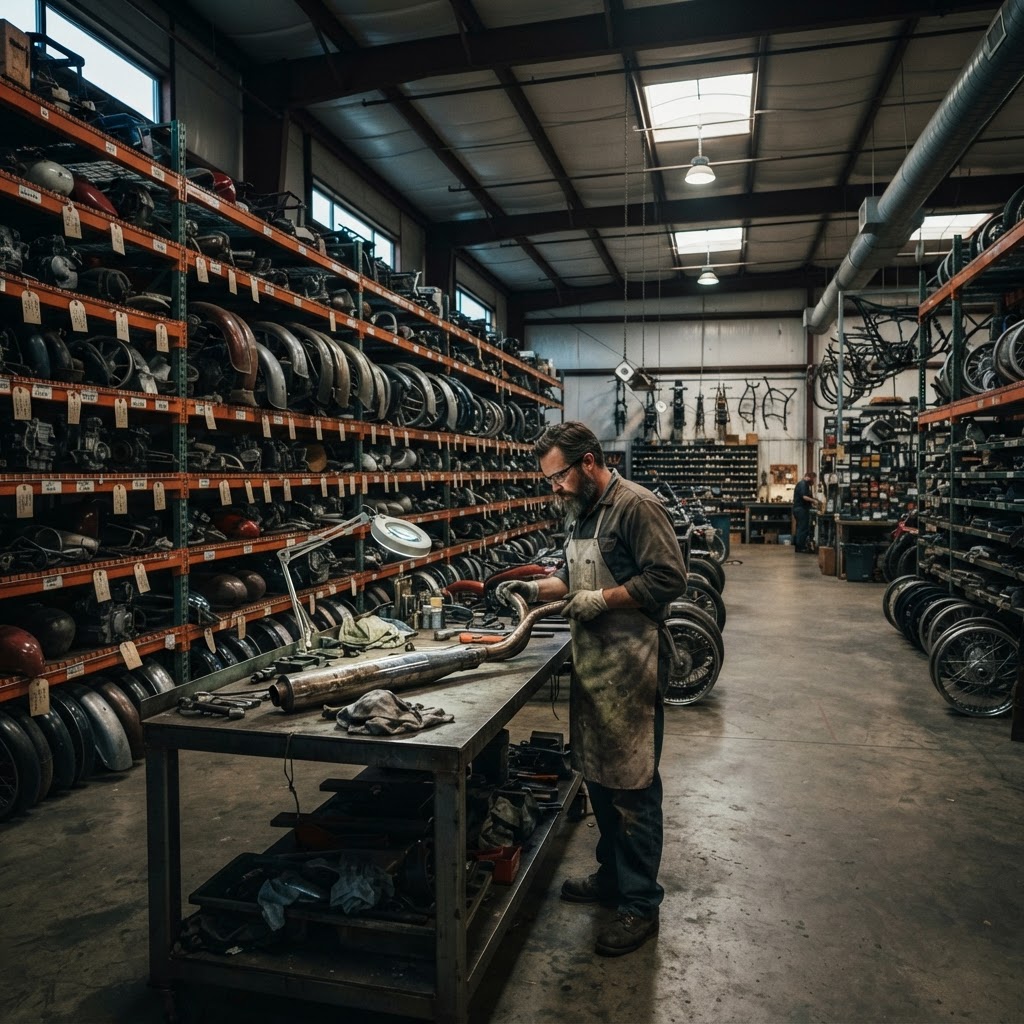
There is a distinct smell to an older motorcycle or ATV that has been sitting in a barn for a decade. It is a mix of stale gasoline, oxidized aluminum, and opportunity. For many wrenchers, riders, and enthusiasts, the idea of turning that neglected metal into a profitable venture is the ultimate dream. But learning how to start a powersports parts business from scratch requires much more than just a set of socket wrenches and an empty garage. It requires a systematic approach to buying, dismantling, inventorying, and selling.
In the early days of your business, the learning curve will feel steep. You are not just a mechanic; you are an inventory manager, a logistics coordinator, an online seller, and a customer service representative. The powersports parts industry is incredibly lucrative for those who can build efficient systems, but it is notoriously brutal to those who try to wing it. Without a solid foundation, you can quickly find yourself buried under a mountain of unlabeled parts, bleeding cash on unsellable inventory.
This comprehensive guide is designed for the working dismantler. Whether you are aiming to build a full-scale salvage yard startup or looking to scale a serious side hustle into a full-time motorcycle parts business, this blueprint will cover everything you need to know to survive and thrive in year one. We will walk through the legalities, sourcing, teardowns, storage, listing, and shipping, ensuring you have the exact roadmap needed to turn salvaged machines into sustained profit.
1. The Blueprint: Foundation and Legalities
Before you turn your first bolt, you need to establish a legitimate business foundation. Operating a motorcycle parts business without the proper licenses can lead to massive fines, zoning violations, and the forced closure of your operation. Year one is about setting things up right so you never have to look over your shoulder.
Business Structure and Licensing
The first step is forming a legal entity, typically a Limited Liability Company (LLC), to protect your personal assets. Once your entity is formed, you must dive into the specific licensing requirements of your state and municipality. Most states require a specific dismantler, recycler, or salvage license to legally buy and part out vehicles for profit.
If you plan on occasionally rebuilding and selling whole motorcycles with clean titles alongside your parts business, you may also need a dealer license. Do not skip this step. Local zoning laws are equally critical. You cannot legally run a high-volume salvage yard startup out of a residential subdivision. You will need an industrial-zoned space, or an agricultural space with the proper variances, to avoid the wrath of local code enforcement.
Environmental Compliance
Dismantling powersports vehicles involves handling hazardous materials. Gasoline, engine oil, brake fluid, coolant, and fork oil must be drained, stored, and disposed of according to Environmental Protection Agency (EPA) regulations and local laws. In year one, invest in dedicated, color-coded fluid capture drums and establish a relationship with a local waste oil and fluid recycling company. Keeping a spotless, environmentally compliant shop not only prevents fines but also makes your daily workflow significantly safer and cleaner.
2. Sourcing Your First Donor Machines
Your motorcycle parts business will only ever be as good as the inventory you bring through the doors. Buying the wrong bikes will tie up your capital and fill your shelves with dead weight. You need a reliable pipeline of donor machines at prices that guarantee a strong return on investment (ROI).
Where to Find Inventory
In year one, you will likely source vehicles from three primary channels:
- Salvage Auctions: Platforms like Copart and IAAI are the lifeblood of a salvage yard startup. You will need your dismantler license (or a broker) to bid on insurance totals. Look for bikes with cosmetic damage but intact, highly desirable components like engines, frames, and clean exhaust systems.
- Private Sellers: Scouring Facebook Marketplace, Craigslist, and local classifieds can yield incredible deals. Look for "mechanic specials," abandoned projects, or bikes sitting with lost titles (always ensure you get a notarized bill of sale and run the VIN to ensure it isn't stolen).
- Tow Yards and Impound Lots: Local towing companies frequently auction off abandoned motorcycles and ATVs. Building relationships with local tow operators can give you first pick of powersports vehicles before they go to public auction.
The Rule of Thirds for Profitability
When evaluating a donor bike, successful dismantlers use a variation of the "Rule of Thirds." If you estimate that a completely dismantled bike will yield $3,000 in gross part sales, you should aim to buy the bike for no more than $1,000 (one-third). The second third covers your overhead, labor, seller fees, and shipping materials. The final third is your net profit. If the math doesn't align with this ratio, walk away. There is always another bike.
3. The Teardown Process: Efficiency is Everything
Time is your most valuable asset when you start a powersports parts business. If it takes you a full week to strip a single ATV, your hourly rate will be dismal. You need to establish a standardized teardown workflow that maximizes speed without damaging valuable components.
Essential Teardown Tools
You do not need a $50,000 Snap-On tool setup in year one, but you do need equipment that saves time. Invest in:
- A heavy-duty pneumatic or hydraulic lift table (working on the ground will destroy your back).
- High-quality cordless impact wrenches (1/4", 3/8", and 1/2" drives).
- A dedicated fluid evacuation system.
- Hundreds of heavy-duty Ziploc bags and sharpies for hardware.
- A rolling teardown cart to organize parts as they come off the bike.
The Sequential Teardown
Never tear down a bike haphazardly. Follow a strict sequence. Start with the plastics, seat, and easily removable cosmetics. Next, pull the fuel tank and drain the remaining fuel. Move on to the exhaust system, the carburetor or EFI throttle bodies, and the airbox. Once the perimeter is stripped, carefully remove the wiring harness—do not cut wires if you can avoid it, as uncut harnesses are highly valuable. Finally, drop the engine, remove the suspension, and strip the frame.
Crucially, bag the mounting hardware with the part it belongs to. Selling a bracket or a master cylinder with the OEM mounting bolts significantly increases its value and sell-through rate.
4. Inventory Management and Storage Solutions
Once a bike is dismantled, you will have anywhere from 50 to 150 individual parts. If you just throw them in a pile, your business will fail. Proper inventory management is the invisible engine of a successful salvage yard startup.
Racking and Bin Systems
Build or buy heavy-duty industrial shelving. Implement an alphanumeric bin location system immediately. For example, Aisle A, Rack 3, Shelf 2, Bin 4 becomes "A-3-2-4". Every single part must be assigned a location code. When an order comes in six months from now, you need to be able to walk directly to the part in under 60 seconds.
Storing Vulnerable Parts
Not all parts can be tossed into plastic bins. Consider active categories like Exhaust systems. A pristine, vintage 1988 Kawasaki KDX200 Spark Arrestor Muffler can easily command $150 on eBay. But if it gets tossed carelessly into a bin with heavy foot pegs and engine covers, it will get dented, scratched, and instantly lose 50% of its value. Hang exhausts from dedicated wall racks. Store CDI boxes and wiring harnesses in climate-controlled areas to prevent moisture corrosion. Wrap painted plastics in bubble wrap before shelving them.
5. Photography, Pricing, and Listing (The Bottleneck)
This is where 90% of new dismantlers hit a wall. Taking photos, researching prices, and creating listings for 100 parts from a single motorcycle is incredibly tedious. If you do not have a system, your shelves will fill up faster than your online store.
Taking Photos That Sell
You do not need a DSLR camera, but you do need excellent lighting. Set up a dedicated photography station with a clean white or light grey backdrop and bright, neutral LED shop lights. Take pictures of the part from every angle. Zoom in on part numbers, and most importantly, be painfully honest about damage. If a fender has a crack, point to it in the photo. Honest photos prevent returns, and returns are the ultimate profit killer in the motorcycle parts business.
Breaking the Bottleneck with RevParts
Listing parts manually on eBay Motors or your own website is a massive drain on your time. This is exactly where smart sellers leverage technology. Successful dismantlers use RevParts to completely streamline this workflow.
Instead of creating 100 individual eBay listings from scratch, RevParts acts as your central command. You can use its powerful listing tool to quickly apply templates, auto-fill fitment data, and push your inventory to multiple marketplaces simultaneously. When you use RevParts, you are cutting your listing time in half, allowing you to get back to the teardown table faster. In year one, adopting a tool like RevParts is the difference between struggling to list 20 parts a day and effortlessly publishing 100.
6. Mini Case Study: From Garage to Warehouse
To understand how this all comes together, let's look at a composite case study of a typical seller we will call "Apex Moto Salvage."
Apex started in a two-car garage. In month one, the owner bought a crashed 2005 Yamaha R6 for $800. He tore it down, took photos on his driveway, and manually typed out every eBay listing. It took him two full weeks to process one bike. By month three, his garage was overflowing, he was losing track of parts, and his sales had plateaued at $2,000 a month because he simply couldn't list fast enough.
In month four, Apex completely changed its operational model. The owner implemented a strict bin-location system and signed up for RevParts to handle the listing bottleneck. By utilizing RevParts to cross-post and manage inventory locations, his processing time dropped from two weeks per bike to just two days.
Because RevParts handled the digital heavy lifting, he could focus on buying and dismantling. By month twelve, Apex Moto Salvage had moved out of the garage into a 3,000-square-foot industrial warehouse, processing five bikes a week and generating over $30,000 a month in gross revenue. The turning point wasn't wrenching faster; it was implementing scalable inventory and listing software.
7. Shipping Heavy and Odd-Shaped Parts
Selling the part is only half the battle; you still have to get it to the buyer intact. Powersports parts are notoriously difficult to ship. They are heavy, greasy, and irregularly shaped.
Mastering the Shipping Carriers
In your first year, you need to understand which carrier to use for which part:
- USPS Ground Advantage: This is your best friend for small, relatively light parts under 10 lbs (CDIs, hardware, master cylinders, small brackets).
- UPS and FedEx Ground: These carriers are essential for mid-weight, bulky items. Engine side covers, wheels, forks, and the aforementioned 1988 Kawasaki KDX200 Spark Arrestor Muffler will almost always ship most economically via UPS or FedEx.
- LTL Freight: For complete engines and ATV frames, you must use Less-Than-Truckload (LTL) freight. You will need to learn how to strap engines to custom-cut pallets securely, drain them completely of oil, and wrap them in industrial shrink wrap.
Packaging Best Practices
Never skimp on packaging materials. Buy boxes, bubble wrap, and void fill in bulk. When shipping odd-shaped items like plastics or exhaust headers, you will often need to "frankenship"—cutting and telescoping two boxes together to create a custom fit. Always ensure the part cannot move inside the box. If you shake the box and feel the part shifting, it is not packed securely enough and risks damage during transit.
The Road Ahead
Starting a powersports parts business from scratch is an exercise in grit, organization, and efficiency. Year one will test your patience as you navigate auctions, build out your storage systems, and fine-tune your teardown process. However, by establishing a legal foundation, sourcing smartly, maintaining a rigorous inventory system, and mastering the art of shipping, you are setting yourself up for incredible, scalable success.
The most important lesson of year one is to value your time. Do not let the tedious process of data entry and listing keep you from growing your salvage yard startup. Automate what you can, organize everything, and keep the donor bikes rolling in.
Ready to start listing your parts? Sign up free at RevParts → https://revpartspro.com/become-seller
Stay in the loop
Get the latest powersports tips, new parts alerts, and seller guides — straight to your inbox. No spam.