Garage to Profits: A RevParts Seller Success Guide
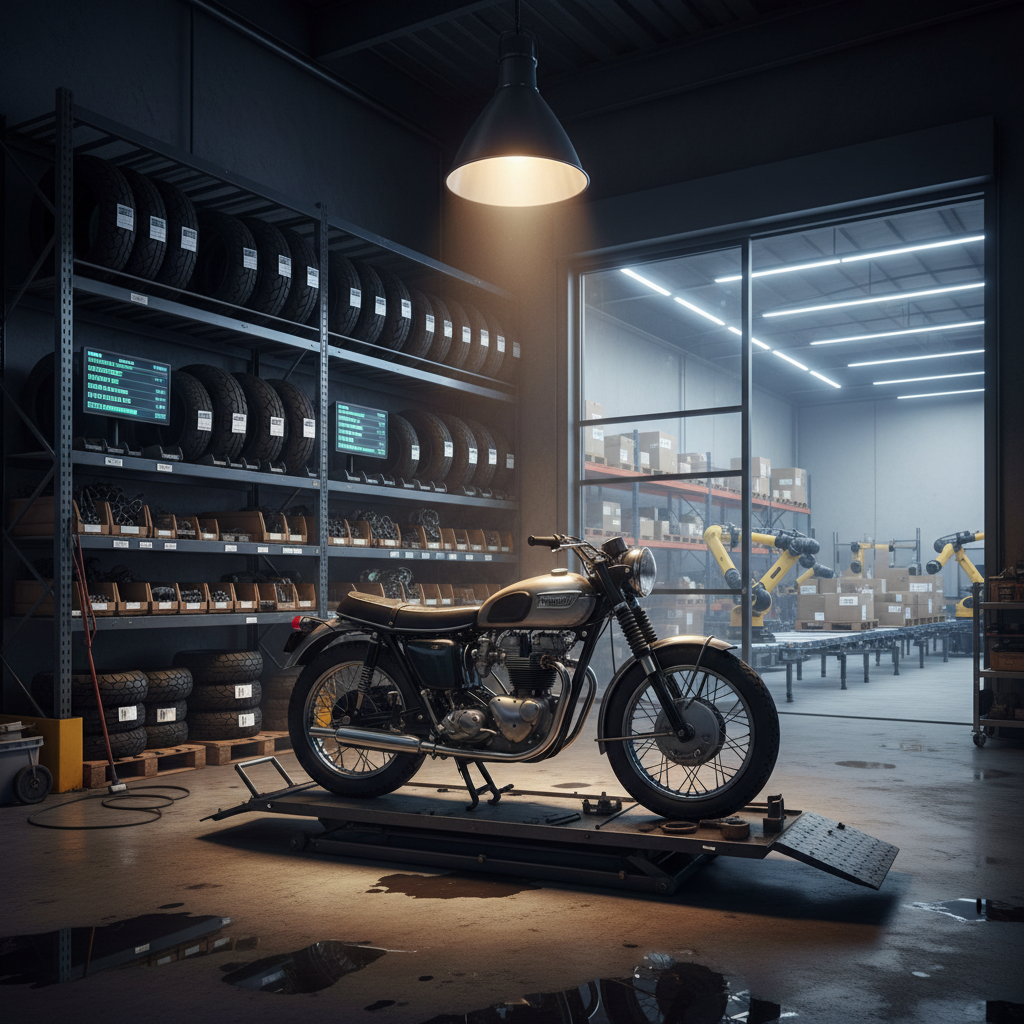
It usually starts with a single, stubborn project bike. You buy a non-running motorcycle off Facebook Marketplace or Craigslist with dreams of restoring it. But as you dig into the teardown, you realize the engine case is cracked, or the transmission is shot. Instead of taking a total loss, you decide to part it out to recoup your initial investment. You list the pristine gas tank, the straight forks, and the clean exhaust system on eBay Motors. Within a week, those parts sell for double what you paid for the entire bike. Suddenly, the lightbulb turns on, and the sweet smell of old gasoline and grease starts to smell a lot like opportunity.
This is the genesis story for almost every successful motorcycle parts seller. What begins as a weekend garage hobby—turning wrenches to fund your own riding habit—can quickly snowball into a highly profitable salvage operation. The powersports dismantling industry is uniquely lucrative. Enthusiasts are constantly crashing, upgrading, and restoring ATVs, dirt bikes, street bikes, and side-by-sides. They need OEM parts, and they need them now. However, making the leap from casually selling a few parts out of a cardboard box to running a structured, high-volume powersports business requires a massive shift in mindset, workflow, and technology.
If you want to stop tripping over greasy stators and start scaling a legitimate enterprise, you need systems. You need efficiency. Most importantly, you need the right software to manage your inventory and listings. In this comprehensive guide, we will break down exactly how you can transition from a hobbyist to a highly profitable seller, mastering everything from workspace organization to inventory management, and revealing how modern tools can eliminate the biggest bottlenecks in your operation.
The Evolution of a Motorcycle Parts Seller
The journey from hobbyist to professional dismantler is paved with trial, error, and a lot of dirty fingernails. In the early days, you might only tear down one bike a month. You can keep track of what you have in your head, maybe scribbling down notes on a whiteboard. You manually take pictures of each part with your phone, email them to yourself, and spend 15 minutes drafting a single eBay listing.
This manual process works fine for your first 50 parts. But what happens when you buy an entire lot of wrecked dirt bikes from an insurance auction? What happens when your inventory grows to 500, or 5,000 parts?
The traditional bottleneck for any growing powersports business isn't taking the bikes apart—it's the data entry. Taking photos, determining accurate fitment, cross-referencing OEM part numbers, weighing the item, and formatting a professional listing consumes hours of tedious labor. To evolve, you must treat your operation like a manufacturing assembly line, but in reverse. You are taking a complex machine and breaking it down into individual, salable SKUs, and you need a system that can handle that flow of data seamlessly.
Building the Foundation of a Profitable Powersports Business
Before you start bidding on pallets of crashed motorcycles, you need to physically and digitally prepare your workspace. A disorganized shop will bleed your profits through lost parts, shipping errors, and wasted time.
Step 1: Optimize Your Teardown Workspace
Your teardown area should be completely separate from your clean storage area. You need a dedicated hydraulic lift, a localized tool cart, and a series of teardown bins. As you strip a donor vehicle, parts should immediately be separated by category: engine components, electrical, suspension, plastics, and exhaust. Have an air compressor, impact wrenches, and specialized pullers ready to go. The goal is to strip a standard motorcycle down to the bare frame in under three hours.
Step 2: Establish an Ironclad SKU and Bin System
Never list a part without a home. If you sell a part and spend an hour looking for it in a mountain of cardboard boxes, your hourly profit rate drops to zero. Implement a strict alphanumeric bin system (e.g., Aisle 1, Shelf B, Bin 4 translates to Location 1B4). Every single part must be assigned a unique SKU (Stock Keeping Unit) and a physical location the moment it is listed. Write the SKU directly on the part using a silver Sharpie or attach a designated barcode tag.
Step 3: Implement a Cleaning and Photography Station
Clean parts sell faster and for more money. You don't need to polish them to a mirror shine, but a quick trip to the parts washer or a wipe-down with degreaser pays dividends. Next, set up a dedicated photography station with bright, diffused LED lighting and a clean, neutral backdrop (like white or gray seamless paper). Clear, well-lit photos build buyer trust and drastically reduce return rates.
The Art of Teardown and Part Identification
Not every part on a wrecked bike is worth listing. The secret to maximizing your powersports business profit is knowing what to sell, what to scrap, and what to bundle.
Prioritizing High-Value Components
When you get a new donor vehicle, prioritize the heavy hitters. Engines, frames (with clear titles), clean carburetors, CDI boxes, and exhaust systems move quickly. By listing these first, you can often recoup your initial investment in the bike within a few days, making the rest of the teardown pure profit.
Example: The Profitable Exhaust System
Let's look at a practical example from our active inventory categories: Exhausts. Often, a hobbyist might look at an old dirt bike and assume the rusted exhaust pipe is junk. But an experienced motorcycle parts seller knows exactly what to look for. For instance, the original FMF or Pro Circuit Spark Arrestor on an older 2-stroke is highly sought after by vintage racers and trail riders who need to meet forestry regulations.
If you pull a vintage Spark Arrestor, clean up the mounting points, and clearly photograph the USFS approval stampings, that single piece can easily retail for $150. Instead of tossing it in the scrap pile or selling the entire exhaust system for $50 locally, identifying the specific, high-demand component triples your profit margin.
Bundling Low-Value Items
Conversely, don't waste 20 minutes listing a $5 bracket. Bundle all the engine mounting bolts into a single "Engine Hardware Kit" and sell it for $25. Bundle the rear brake master cylinder, line, and caliper as a complete "Rear Brake Assembly." Bundling saves listing time, saves the buyer from hunting down individual pieces, and increases your average order value.
Overcoming the Listing Bottleneck with Technology
We have established that the actual mechanical teardown is the easy part. The real challenge—and the reason many hobbyists fail to scale—is the listing process.
If you are manually typing out titles, copying and pasting descriptions, guessing shipping weights, and manually searching for compatible years and models (fitment), you are burning money. This is exactly where becoming a RevParts seller changes the trajectory of your entire business.
The RevParts Advantage
To truly scale, you need a listing tool designed specifically for the salvage industry. The RevParts platform is built to solve the exact headaches a motorcycle parts seller faces daily. Instead of building listings from scratch, a RevParts seller can utilize a streamlined workflow that drastically cuts down data entry time.
When you use RevParts, you aren't just pushing text to eBay Motors. You are utilizing a dedicated ecosystem that understands powersports inventory. Our platform allows you to rapidly create listings, input your custom SKUs, assign bin locations, and most importantly, manage your multi-channel inventory from one single dashboard. By using RevParts as your core operational software, you can list a teardown batch of 50 parts in a fraction of the time it would take to do manually, freeing you up to wrench on the next bike.
Mini Case Study: Jake's Garage to Warehouse Journey
To see how this looks in the real world, let's look at the journey of Jake, a dedicated seller who transformed his operation.
The Background: Jake started flipping dirt bike parts out of his 2-car garage in Ohio to pay for his weekend track days. He was good at finding cheap, blown-up 250cc motocross bikes. For two years, he manually dismantled, cleaned, and listed parts, keeping track of his inventory on a chaotic Excel spreadsheet.
The Tipping Point: Jake's inventory hit 800 items. One day, he sold a $300 cylinder head on eBay. He went to his garage to pack it, but he couldn't find it. After three hours of frantic searching through dusty boxes, he realized he had sold it locally two months prior and forgot to take the eBay listing down. He had to cancel the order, take a hit to his seller metrics, and deal with an angry customer. He realized his hobby had outgrown his manual systems.
The Solution: Jake decided it was time to professionalize. He rented a small 1,500 sq ft commercial bay. He built massive rows of U-line shelving, bought a stack of uniform plastic bins, and signed up to become a RevParts seller. He spent one agonizing week doing a full inventory audit, assigning a RevParts SKU to every single item, and inputting the exact shelf and bin location into the software.
The Results: With RevParts handling the inventory sync and listing generation, Jake's listing speed tripled. Because his bin locations were tied directly to the software, picking and packing an order went from a 15-minute treasure hunt to a 60-second guarantee. Within 12 months of implementing professional software and strict inventory protocols, Jake scaled from $2,000 a month in gross sales to over $15,000 a month, eventually hiring a part-time teardown mechanic so he could focus purely on sourcing and listing.
Shipping, Customer Service, and Scaling Up
Once the software is handling the listings, your next operational hurdle is logistics. Shipping bulky powersports parts requires planning and the right materials.
Mastering the Art of Shipping Bulky Parts
Forks, frames, and exhaust pipes are notoriously difficult to ship.
- For small, unbreakable items: Use poly mailers and bubble wrap. They are cheap, lightweight, and perfect for stators, CDI boxes, and wiring harnesses.
- For exhaust pipes (like our $150 Spark Arrestor): Use telescoping boxes or heavy-duty cardboard tubes. Wrap the silencer heavily in bubble wrap, ensuring the delicate mounting brackets are protected from impact.
- For engines: You will need to learn freight shipping. Build custom wooden mini-pallets, drain all fluids completely, strap the engine down with heavy-duty ratchets, and wrap the entire assembly in industrial shrink wrap.
Elevating Customer Service
In the salvage game, disputes happen. A buyer might claim a part doesn't fit, or a shipping carrier might damage a fender. The key to maintaining your eBay Top Rated status (which gives you crucial final value fee discounts) is rapid, professional communication. Always accept returns graciously. It is a cost of doing business. If you argue with a buyer over a $40 part, eBay will likely side with them anyway, and you will earn a damaging negative review. Eat the loss, get the part back, and relist it.
Financial Management and Reinvestment
A true powersports business doesn't just spend its profits; it reinvests them to create a compounding growth effect.
Sourcing Donor Bikes Strategically
As you scale, you must move beyond Craigslist and Facebook Marketplace. Start building relationships with local towing companies, independent motorcycle repair shops, and powersports dealerships. They frequently end up with abandoned or wrecked bikes they just want gone. Furthermore, register for access to major salvage auctions like Copart or IAAI.
Understanding Your Margins
Track everything. Know exactly how much you paid for a bike, how much you spent on freight to get it to your shop, and how much your listing software and eBay fees are costing you. A healthy salvage operation should aim to triple the cost of the donor bike in gross sales. If you buy a wrecked ATV for $800, your goal should be to extract at least $2,400 in viable, sellable parts.
Conclusion: Your Next Steps to Profitability
Turning a messy, oil-stained garage hobby into a finely tuned powersports business is entirely possible. It requires a willingness to adopt strict organizational habits, a dedication to professional customer service, and the intelligence to let technology handle the heavy lifting. By setting up physical inventory systems, focusing on high-value items, and leveraging industry-specific software, you can break through the bottlenecks that hold standard hobbyists back.
You have the mechanical skills. You have the drive. Now, you just need the right tools in your digital toolbox to take your sales to the next level. Stop wasting hours on manual data entry and start treating your salvage operation like the powerhouse it can be.
Ready to start listing your parts? Sign up free at RevParts → https://revpartspro.com/become-seller
Stay in the loop
Get the latest powersports tips, new parts alerts, and seller guides — straight to your inbox. No spam.