Motorcycle Parts Inventory Management for Dismantlers
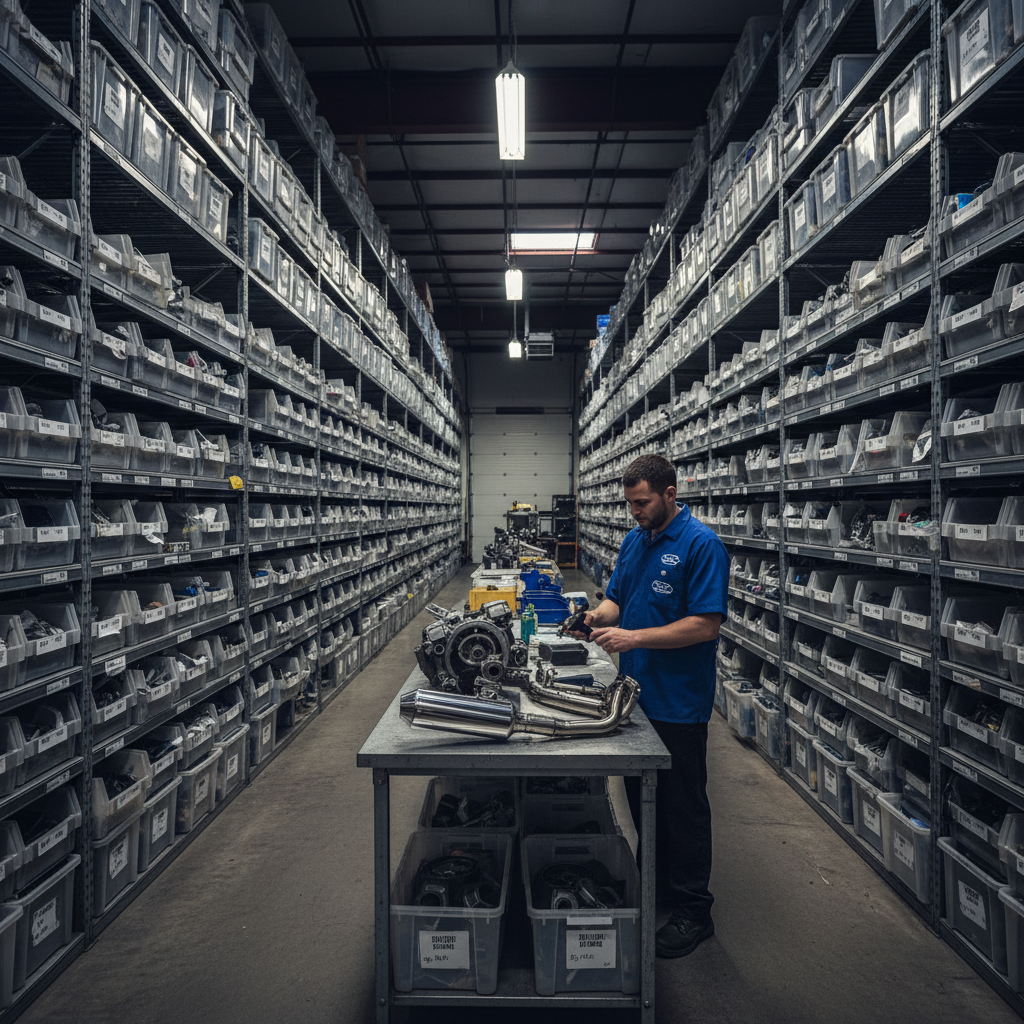
Imagine walking into a powersports salvage warehouse. On one side, you have a sprawling, chaotic mountain of unmarked fairings, tangled wiring harnesses, and oily engine cases. On the other side, you have pristine, barcoded bins stacked floor to ceiling, where every single bolt, exhaust pipe, and stator is cataloged and trackable down to the exact shelf. The difference between these two operations isn't just aesthetics—it's the difference between a failing business and a highly profitable powersports dismantling enterprise. The core differentiator? A rigorous approach to motorcycle parts inventory.
For professional dismantlers, breaking down a single motorcycle can yield anywhere from 50 to over 200 individual sellable parts. When you multiply that by dozens of donor bikes arriving each month, you're suddenly looking at thousands of unique SKUs. Without a bulletproof system to manage this massive influx of components, parts get lost, listings become inaccurate, and customers receive the wrong items. In the highly competitive world of powersports salvage, operational efficiency is your ultimate currency.
In this comprehensive guide, we are going to pull back the curtain on how elite salvage yards and dismantlers organize, track, and optimize their massive catalogs. From the initial teardown of a wrecked bike to the final stages of picking and packing, we'll explore the methodologies, bin systems, and dismantler tools that keep the chaos at bay and the profits rolling in.
The Unique Challenges of Powersports Inventory
Motorcycle parts inventory presents a distinct set of challenges that differ wildly from traditional retail or even automotive salvage. When you run a motorcycle salvage yard, you are dealing with an incredibly diverse range of components that vary dramatically in size, shape, and fragility.
Size Discrepancies and Storage Headaches
In a single teardown, you might pull a massive, heavy touring frame and a tiny, delicate throttle position sensor. Traditional shelving systems are often ill-equipped to handle this level of variance. You need specialized racking for large items like frames, forks, and engines, alongside high-density micro-bins for relays, hardware, and brackets.
Interchangeability and Fitment
The powersports industry is notorious for complex fitment data. A specific brake caliper might fit 15 different models across a 10-year span, while a nearly identical caliper from the same manufacturer only fits one specific year. Tracking this fitment data is crucial for maximizing sales, but attempting to manage it manually is practically impossible. This is why specialized dismantler tools and software are essential for survival.
Condition Variance
Unlike selling new parts, every salvaged part has a unique condition. You might have five identical stators in stock, but one has a spliced wire, another has a chipped housing, and three are in perfect working order. Each must be tracked as a unique entity, making standard inventory methods obsolete.
The Blueprint for Success: Pre-Dismantling and Documentation
The secret to flawless motorcycle parts inventory management begins before a single wrench is turned. Elite dismantlers know that the documentation phase is the foundation of their entire operation.
Processing the Donor Vehicle
When a wrecked or salvage bike arrives at the facility, it must be thoroughly documented as a master record. This involves:
- VIN Logging: Recording the Vehicle Identification Number to establish the legal provenance of all subsequent parts.
- Initial Photography: Taking wide-angle shots of the complete bike to prove its original state to future buyers.
- Testing and Verification: Whenever possible, running the engine, testing electrical systems, and shifting through gears. Documenting a video of a running engine adds massive value to the eventual listing.
Creating the Master Record
Using advanced parts management software, the dismantler creates a "Donor Profile." Every part that is subsequently pulled from this bike will be intrinsically linked back to this master record. This ensures that if a buyer asks, "What year did this exhaust come off of?" the data is instantly accessible.
Mastering the Teardown: Turning One Bike into 150 SKUs
The teardown process is where the physical labor meets the digital inventory system. This is a highly systematic process, not a free-for-all.
Strategic Dismantling Workflows
Professional mechanics approach the teardown in phases:
- Plastics and Bodywork: Removing the fragile, bulky items first to prevent damage.
- Electrical and Wiring: Carefully unplugging harnesses rather than cutting them, preserving maximum resale value.
- Exhaust and Peripherals: Removing the exhaust system, cooling system, and intake components.
- Rolling Chassis: Dropping the engine from the frame and separating the wheels, forks, and swingarm.
The Golden Rule of Tagging
As soon as a part is separated from the motorcycle, it must be tagged. Elite yards have a zero-tolerance policy for untagged parts sitting on workbenches. If a part isn't tagged immediately, its identity is compromised. Dismantlers use heavy-duty weather-resistant tags, zip-tied securely to the component, displaying a unique Barcode, the Donor ID, and the Part Name.
Establishing a Foolproof Bin and Storage Architecture
Having beautifully tagged parts is useless if you can't find them when they sell. Your physical warehouse must be a mirror image of your digital motorcycle parts inventory system.
The Hierarchical Location System
The most effective dismantlers use a multi-tiered alphanumeric location system:
- Zone: Broad areas of the warehouse (e.g., Zone A for electrical, Zone B for engines).
- Aisle: The specific row of shelving.
- Bay: The vertical section of the aisle.
- Shelf: The specific horizontal level.
- Bin: The exact plastic tote or box where the item lives.
For example, a location code of
A-04-02-C-15Specialized Storage for Complex Categories
Certain categories, like the Exhaust category, require specific handling. Exhaust headers are awkwardly shaped and easily scratched. Many dismantlers use specialized vertical racks with padded dividers to store full exhaust systems. However, highly valuable sub-components, like a pristine Spark Arrestor, are often separated, placed in protective bubble wrap, and stored in secure, high-density bins to prevent damage.
Building the Perfect SKU and Barcode Strategy
Stock Keeping Units (SKUs) are the DNA of your inventory. A well-structured SKU provides immediate context about the part.
Designing Your SKUs
A robust naming convention might look like this:
[Donor ID]-[Part Category]-[Sequential Number]1045-BRK-012The Power of Barcoding
Barcoding is what separates the amateurs from the professionals. Every bin location should have a barcode, and every part tag should have a barcode. When a part is placed into inventory, the dismantler uses a scanner to scan the Part Tag, then scans the Bin Location. This instantly updates the digital database, marrying the part to its physical home.
The Digital Transformation: Leveraging Parts Management Software
Attempting to run a high-volume salvage operation on spreadsheets is a recipe for disaster. The sheer volume of data—fitment, condition, pricing, location, and photos—requires a dedicated solution. This is where modern dismantler tools come into play.
When you use specialized parts management software like RevParts, you eliminate double-data entry and dramatically reduce human error. RevParts is built specifically for the nuances of powersports and salvage operations.
Seamless Cross-Posting
One of the biggest bottlenecks for dismantlers is getting parts listed online. With a tool like RevParts, your inventory is centralized. You input the part data once, and the software can syndicate that listing across multiple channels, serving as your ultimate eBay Motors listing tool and direct marketplace.
Automated Fitment Generation
Instead of manually researching which bikes a stator fits, top-tier software utilizes databases to automatically populate compatibility charts, ensuring your listings capture the widest possible audience without extra labor.
Streamlining Photography and Listing Workflows
In online salvage sales, a picture isn't just worth a thousand words; it's worth the entire sale. Buyers need to see the exact scratches, dents, and wear on a used part.
The Photo Station Setup
Professional yards build dedicated photo stations with:
- Consistent, bright LED lighting (daylight balanced).
- A clean, neutral backdrop (usually white or light grey).
- A turntable for easily capturing multiple angles of heavy parts.
- Overhead mounts for flat items.
The Workflow Integration
Once a part is cleaned and tagged, it moves to the photo station. The photographer scans the barcode, snapping 5 to 10 high-resolution images. Advanced platforms automatically link these photos to the corresponding SKU in the database. There is no manual uploading, renaming of files, or guessing which photo belongs to which listing.
Mini Case Study: From Chaos to Control at Apex Salvage
To truly understand the impact of professional motorcycle parts inventory management, let's look at a real-world scenario with a rapidly growing facility, "Apex Powersports Salvage."
Apex was struggling. They had scaled from 500 parts to over 5,000 parts in less than a year. Their warehouse was a mess, mechanics were spending hours looking for sold items, and their eBay defect rate was climbing because they kept shipping the wrong parts.
They realized they needed to overhaul their operations. They implemented a strict barcoding system and adopted RevParts as their primary marketplace and eBay Motors listing tool.
The Spark Arrestor Scenario
Shortly after the transition, a wrecked 2019 KTM 300 XC-W arrived. The teardown commenced. When the mechanic reached the active Exhaust category, they found an aftermarket FMF system. The header pipe was severely dented, rendering the full system unsellable as a unit.
In the old days, Apex might have thrown the whole thing in the scrap bin. But with their new optimized workflow, the mechanic recognized the value of the components. They separated the slip-on silencer and removed the pristine, high-dollar spark arrestor.
The mechanic generated a new tag for the item. The item was cleaned, photographed, and scanned into Bin
C-12-04Within 48 hours, the Spark Arrestor ($150) sold. The shipping team received a pick list generated by the software, directing them exactly to Bin
C-12-04Audits, Cycle Counts, and Long-Term Inventory Health
Even with the best systems in place, entropy happens. Parts get moved, tags fall off, and human errors occur. To maintain a healthy motorcycle parts inventory, professional dismantlers rely on routine audits.
The Importance of Cycle Counting
Instead of shutting down the entire warehouse once a year for a massive, painful inventory count, elite yards use "Cycle Counting." This means counting a small, specific section of the warehouse every single week.
For example, during week one, the team might audit Aisle 1. They scan every bin and every part within that aisle. The software instantly highlights discrepancies—parts that should be there but aren't, and parts that are there but shouldn't be. By the end of the year, the entire warehouse has been audited multiple times without ever halting operations.
Managing Dead Stock
Not every part sells quickly. Inventory management is also about recognizing what is taking up valuable shelf space. Dismantler tools allow owners to run aging reports, identifying parts that have sat unsold for over 365 days. These parts can then be aggressively discounted, bundled, or ultimately scrapped to make room for faster-moving, higher-margin inventory.
Conclusion: Turning Your Inventory Into a Competitive Advantage
Mastering motorcycle parts inventory is not for the faint of heart. It requires discipline, strict workflows, and a commitment to data accuracy. But the rewards are massive. When your warehouse operates like a well-oiled machine, your listing speed increases, your shipping errors drop to zero, and your profitability skyrockets. You stop being just a salvage mechanic and become a highly efficient e-commerce logistics powerhouse.
By implementing the bin architectures, barcoding strategies, and teardown workflows we've outlined, you lay the foundation for scalable growth. But the true catalyst for this growth is the technology you use to tie it all together. You need a platform that understands the powersports industry, handles complex fitment, and automates your cross-posting.
RevParts streamlines this entire workflow, giving you the ultimate command center for your salvage operation.
Ready to start listing your parts? Sign up free at RevParts → https://revpartspro.com/become-seller
Stay in the loop
Get the latest powersports tips, new parts alerts, and seller guides — straight to your inbox. No spam.