RevParts Syncs to Shopify & Facebook for Powersports Sellers
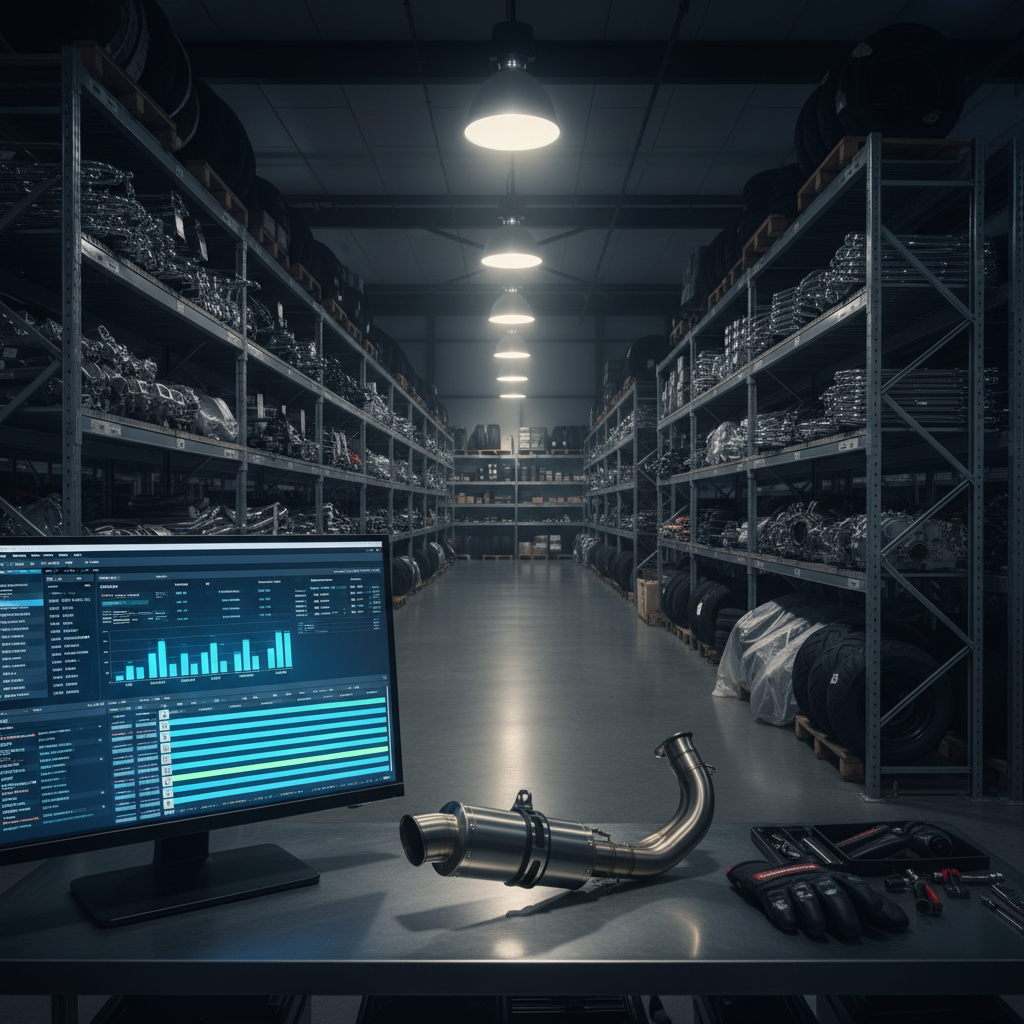
Imagine standing in the center of your salvage warehouse. You are surrounded by a dozen freshly dismantled ATVs, a row of late-model sportbikes waiting for the wrench, and shelves packed with high-value components. You know exactly what you have in stock, down to the last exhaust header and brake caliper. But the moment you walk into your office to list those parts online, that physical organization transforms into digital chaos. You list a part on eBay, manually upload it to your website, and then share it on social media. When it sells on one platform, the race begins to manually delete it from the others before a double-sale ruins your seller rating. For powersports dismantlers, this manual data entry is the ultimate bottleneck to growth.
For years, powersports salvage sellers have had to make a difficult choice: either limit your sales potential by sticking to a single marketplace like eBay, or hire a small army of data entry clerks to manage multiple platforms. Neither option is sustainable in today’s hyper-competitive e-commerce landscape. Buyers are everywhere. They are hunting for deals in Facebook groups, searching Google for direct salvage yard websites, and browsing marketplace apps on their phones. If your parts aren't visible across all these channels, you are leaving serious revenue on the table.
The days of choosing between multi-channel visibility and operational sanity are officially over. We are thrilled to announce that RevParts now seamlessly syncs your inventory directly to Shopify and Facebook. This groundbreaking update brings enterprise-level omnichannel inventory sync to powersports dismantlers of all sizes. By centralizing your operations, you can now push your listings far beyond eBay, getting your premium salvaged parts in front of millions of active buyers on their favorite platforms, all without entering a single piece of data twice.
The Evolution of Powersports Parts Sales
The powersports salvage industry has evolved dramatically over the last decade. It wasn't that long ago that selling used motorcycle, ATV, and UTV parts meant relying on foot traffic, word-of-mouth, and calling down a Rolodex of local mechanics. When e-commerce entered the chat, eBay became the undisputed king of the salvage market. It provided an incredible, ready-to-buy audience. However, relying entirely on one platform means you are entirely at the mercy of their algorithm updates, fee structures, and policy changes.
Why Single-Channel Selling is a Liability
When you only sell on one platform, you are essentially renting your business space rather than owning it. If a marketplace decides to increase their final value fees, your profit margins instantly shrink. If their search algorithm changes and prioritizes big-box retailers over individual dismantlers, your sales can plummet overnight. Furthermore, you do not own your customer data. You cannot easily email previous buyers when a new bike that matches their previous purchases comes into your yard.
The Necessity of Omnichannel Inventory Sync
To build a resilient, scalable salvage business, you must diversify your sales channels. This strategy is known as omnichannel e-commerce. It means your inventory is available everywhere your customers are looking, providing a unified shopping experience.
However, true omnichannel selling is impossible without automated synchronization. If you tear down a 2019 Yamaha YZ250F and generate 60 individual parts, listing them manually across three different websites would take hours. When one part sells, updating the other two platforms takes even more time. Omnichannel inventory sync acts as the central nervous system for your business. It ensures that when a part is listed, it goes everywhere. When a part sells, it is removed from everywhere. This eliminates overselling, protects your seller metrics, and frees up your time to focus on what actually makes you money: acquiring and dismantling more machines.
Deep Dive: The RevParts Shopify Integration
Shopify has revolutionized e-commerce, allowing anyone to build a beautiful, highly functional online store. For powersports salvage yards, having your own Shopify store is the key to building brand equity, capturing higher profit margins (by avoiding marketplace fees), and retaining customer data for repeat business.
Building Your Own Brand and Audience
With the new RevParts Shopify integration, launching and managing your independent parts store is easier than ever. When you dismantle a machine and enter the parts into the RevParts system, those listings can be automatically pushed to your Shopify storefront. All of your hard work—the high-resolution photos, the detailed condition descriptions, the precise year/make/model fitment data, and the pricing—transfers flawlessly.
This means you can start driving your own traffic. Instead of paying marketplace fees, you can invest that money into Google Ads or SEO for your Shopify store. When a local powersports repair shop needs a part, they can buy directly from your website. You capture their email address, allowing you to build a VIP list of wholesale buyers who turn to you first when they need components.
Handling Complex Powersports Fitment
Selling clothing or electronics on Shopify is simple. Selling a used motorcycle wiring harness or a specific exhaust manifold is complex. Buyers need to know exactly what years and sub-models a part will fit. The RevParts Shopify integration is built specifically for the nuances of Shopify powersports sales.
Our system intelligently maps your salvage categories. If you are tearing down a dirt bike and listing items in the Exhaust category, RevParts ensures that these parts populate the correct collections on your Shopify store. Your customers can easily filter your website by make, model, and year, finding the exact part they need in seconds.
Tapping into Social Commerce with Facebook
While having your own website is crucial for long-term brand building, you cannot ignore the sheer volume of daily active users on social media. For the automotive and powersports industries, Facebook is not just a place to share photos; it is a massive, highly active marketplace.
The Power of Facebook Shops and Marketplace
Millions of riders and mechanics turn to Facebook Marketplace and dedicated Facebook groups every day to hunt for replacement parts. Whether it’s a track day enthusiast looking for a replacement fairing after a crash, or a trail rider searching for a specific exhaust component, Facebook is where the community gathers.
Historically, selling parts on Facebook meant creating manual posts. You had to upload photos from your phone, write out a description, set a price, and then field dozens of "Is this available?" messages. If you have hundreds or thousands of parts in stock, manual Facebook selling is completely unscalable.
Automating the Facebook Catalog
This is where our new integration changes the game entirely. RevParts now allows you to push your inventory directly into a Facebook Commerce Catalog. This means your Facebook catalog auto parts and powersports listings are automatically generated and kept up-to-date in real-time.
When you use this integration:
- Automated Storefronts: Your Facebook Page automatically populates with a "Shop" tab, displaying your current inventory.
- Dynamic Ads: You can run retargeting ads. If a user views a specific part on your Shopify store but doesn't buy, Facebook can automatically show them an ad for that exact part later in the day.
- Zero Double Entry: Just like the Shopify integration, when a part sells on eBay or your website, it is instantly removed from your Facebook catalog, preventing frustrating out-of-stock cancellations.
By leveraging automated catalog syncing, you turn your social media presence into an active, 24/7 sales channel that requires zero additional daily maintenance.
Real-World Case Study: Scaling with Spark Arrestors
To understand the true impact of this technology, let’s look at a practical, real-world scenario. Meet "Apex Salvage," a mid-sized dirt bike dismantling operation. They process about five bikes a week and have built a solid reputation on eBay, but they are tired of paying high marketplace fees and want to grow their own website and local sales.
Apex recently dismantled a popular enduro motorcycle. Among the high-value parts is a pristine, aftermarket slip-on exhaust featuring a specialized spark arrestor.
The Old Way (Manual Management)
Under their old workflow, the team would clean and photograph the spark arrestor.
- They log into eBay and create the listing, pricing it at $150.
- They log into their website backend, re-upload the photos, copy-paste the description, and set the price.
- They open the Facebook app, upload the photos to Marketplace, and post it to a few local off-road riding groups.
It takes 20 minutes to list one part across three channels. Over a 60-part teardown, that is 20 hours of pure data entry.
A week later, a buyer in an enduro Facebook group claims the Spark Arrestor ($150) and sends payment via PayPal. The Apex team ships it out. However, it's a busy Friday, and the warehouse manager forgets to end the listing on eBay and their website. On Saturday night, a buyer on eBay purchases the exact same, now-sold spark arrestor. On Monday morning, Apex has to cancel the eBay order, resulting in an angry customer, a negative review, and a strike against their seller metrics.
The New Way (The RevParts Omnichannel Advantage)
Now, let's look at how Apex Salvage operates after implementing our new integrations.
The team cleans and photographs the spark arrestor.
- They enter the part into RevParts, categorize it under Exhaust, add the photos, set the price at $150, and click "Publish."
That’s it. The work is done in three minutes.
Behind the scenes, the software takes over. The listing is instantly pushed to their eBay store. The RevParts Shopify integration simultaneously creates a beautifully formatted product page on their independent website. A few minutes later, the automated sync updates their Facebook catalog auto parts feed, and the spark arrestor appears on their Facebook Shop.
When the item sells on their Shopify store on a Saturday night, the system immediately communicates with all other platforms. Before the sun comes up on Sunday, the listing is automatically ended on eBay and removed from the Facebook catalog. No double entry. No overselling. Total peace of mind. Apex Salvage just captured a high-margin sale on their own website without any manual channel management.
Step-by-Step: How to Set Up Your Omnichannel Empire
Getting started with multi-channel syncing might sound technically daunting, but we have designed the process to be as frictionless as possible for busy dismantlers. Here is how you can transform your operation:
Step 1: Clean Up Your Inventory Data
Before you push your inventory to new channels, ensure your data is clean. High-quality photos, accurate part numbers, and precise fitment data (Year/Make/Model) are critical. The better your initial data, the better your parts will perform across all search engines and social platforms.
Step 2: Connect Your Shopify Account
Navigate to your integration settings within your dashboard. Enter your Shopify store credentials to link the systems. You will be prompted to map your inventory categories (e.g., Engine, Suspension, Exhaust) to your specific Shopify collections, ensuring a seamless browsing experience for your website visitors.
Step 3: Link Your Facebook Commerce Manager
Next, connect your Facebook Business account. Our system will generate an automated XML data feed. You simply paste this feed URL into your Facebook Commerce Manager. Facebook will then crawl this link regularly, updating your social storefront with your latest teardowns and automatically removing sold items.
Step 4: Automate and Monitor
Once connected, list a few test parts to watch the magic happen. Verify that the listings look great on your website and social channels. From this point forward, you will manage all of your pricing, quantity, and listing updates from one central dashboard.
The Technical Magic: How It Actually Works
For those who are curious about the engine under the hood, our omnichannel inventory sync relies on advanced API (Application Programming Interface) connections. When you create a listing, the system assigns a unique SKU (Stock Keeping Unit) to that physical part.
This SKU acts as a digital anchor across the internet. The API maintains a constant, secure conversation between your centralized dashboard, eBay, Shopify, and Facebook. It operates on a principle of "Master Inventory Control." If a transaction occurs on any connected platform, that platform pings the master inventory server. The server instantly reduces the quantity available to zero and fires off immediate commands to the other platforms to hide or delete the listing.
This real-time deduction is the holy grail of e-commerce inventory management. It allows you to confidently stock unique, one-off salvaged items—like a perfectly intact gas tank or a rare ECU—and market them globally without the fear of duplicate sales.
The Future of Your Salvage Business
The powersports salvage industry is highly lucrative for those who can efficiently manage the chaos of dismantling, categorizing, and marketing used components. By breaking free from the constraints of single-channel selling, you open your business up to unprecedented growth.
You can build a recognizable brand with a Shopify store. You can tap into the massive, community-driven buyer base on Facebook. And you can do it all without hiring extra staff or working longer hours, thanks to the power of automated synchronization. Your time should be spent turning wrenches and sourcing new salvage units, not updating spreadsheets and manually deleting sold listings.
Stop letting manual data entry cap your earning potential. Take control of your inventory, expand your reach, and start selling where your customers are already shopping.
Ready to start listing your parts? Sign up free at RevParts → https://revpartspro.com/become-seller
Stay in the loop
Get the latest powersports tips, new parts alerts, and seller guides — straight to your inbox. No spam.