Mastering Motorcycle Parts Inventory Management
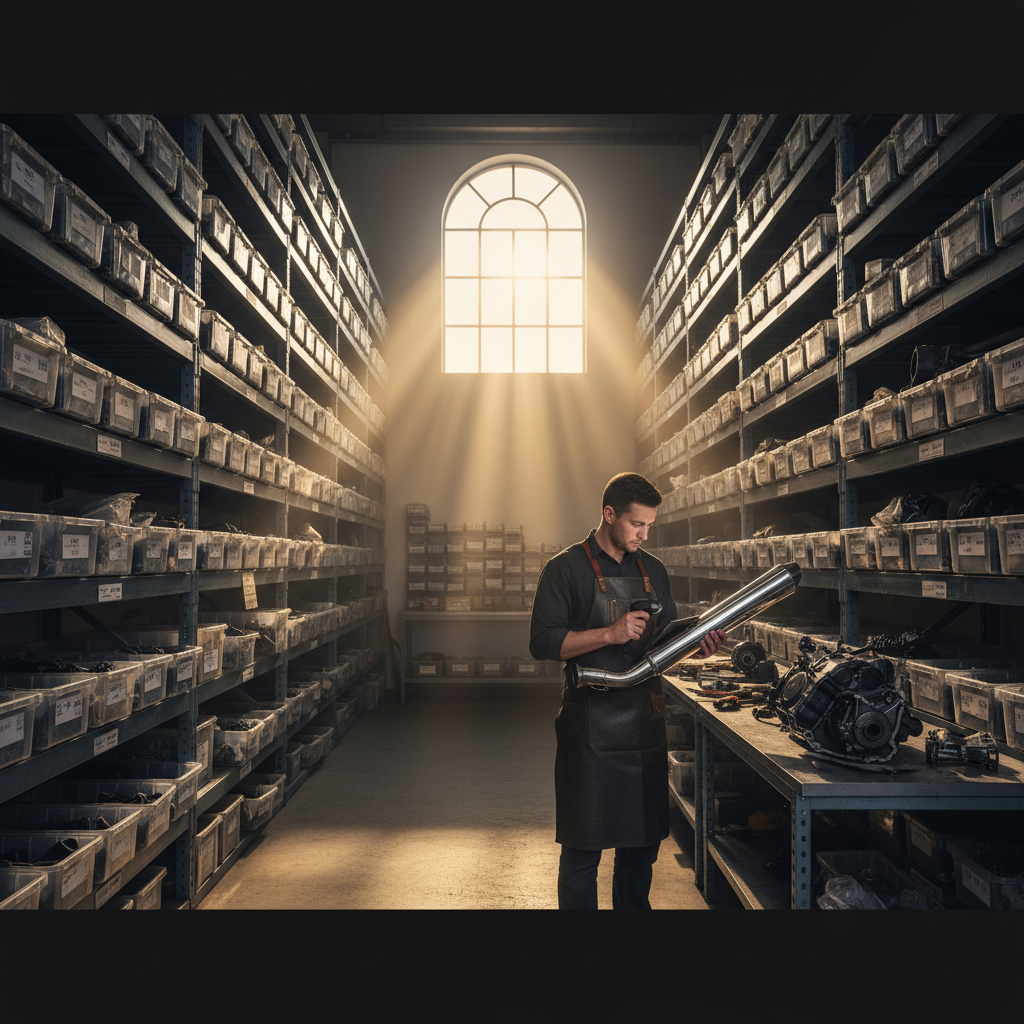
Tearing down a crashed sportbike or an abandoned cruiser is only the first step in a profitable powersports salvage operation. The real challenge—and where the actual money is made—lies in what happens next. If you have ever spent forty-five minutes searching your warehouse for a specific fuel injector, or a pristine $150 spark arrestor that you absolutely know you pulled off a bike last week, you already understand the pain. Unorganized salvage shops lose thousands of dollars annually in missing parts, duplicated efforts, canceled orders, and negative seller feedback.
For professional powersports dismantlers, tracking thousands of unique SKUs across hundreds of different makes, models, and years is a monumental task. The difference between a struggling hobbyist with a cluttered, grease-stained garage and a highly profitable, scaled salvage yard comes down to one critical element: a bulletproof motorcycle parts inventory system. When you start tearing down multiple motorcycles or ATVs every single week, relying on your memory or a disorganized, outdated spreadsheet is a guaranteed recipe for operational disaster.
In this comprehensive guide, we will dive deep into how industry-leading dismantlers organize, track, and optimize their massive warehouses. From establishing the correct physical layout for your bins and racks to leveraging cutting-edge parts management software, we will cover the proven, step-by-step strategies that turn chaotic piles of metal into a streamlined, automated e-commerce empire.
The Unique Chaos of Motorcycle Salvage
Motorcycle and powersports salvage presents a unique set of challenges compared to traditional automotive auto wrecking. Cars have large, easily identifiable parts. While a car door or a fender takes up significant space, it is relatively hard to lose. Motorcycles, on the other hand, are composed of hundreds of small, intricate, and highly valuable components that can easily get lost in the shuffle.
Furthermore, cross-compatibility in the powersports industry is notoriously complex. A fuel system from a 2005 model might fit a 2006 model, but a mid-year manufacturer update might mean it absolutely does not fit the 2007 model. Keeping track of this fitment data manually is nearly impossible. When you pull a perfectly good Carburetor ($150 value) from a bike, you need to know exactly what other bikes that carburetor fits in order to maximize your potential buyer pool on platforms like eBay Motors.
Space and Storage Constraints
Because motorcycle parts are generally smaller, dismantlers often fall into the trap of over-packing their storage areas. Shoving fifty miscellaneous brackets into a single cardboard box labeled "Honda Parts" is not an inventory system; it is a junkyard. To run a professional operation, you need a warehouse layout that prioritizes fast picking, clear visibility, and minimal physical handling of the parts. Every time you touch a part after it has been shelved, you are losing money on labor.
The Foundation of Motorcycle Parts Inventory
Before you can effectively sell parts online, you need to establish a physical taxonomy for your warehouse. A pristine digital listing is completely useless if you cannot physically locate the item when it sells. Professional dismantlers use a standardized, alphanumeric grid system to map out their entire storage facility.
Physical Layout Strategies
Your warehouse should be divided into logical zones based on part size, weight, and sales velocity. Heavy items like engine blocks, frames, and wheels should be stored on heavy-duty pallet racking near the shipping area to minimize heavy lifting. Smaller, high-value components like CDIs, wiring harnesses, and Fuel System components should be stored in highly organized, clearly labeled bins on standard industrial shelving.
A typical, highly effective location coding system looks like this: Zone-Aisle-Bay-Shelf-Bin. For example, a location code of A-04-02-C-15 translates to Zone A, Aisle 4, Bay 2, Shelf C, Bin 15. When a part sells, your picker does not need to know what the part looks like; they only need to follow the map to the exact bin.
Labeling and Barcoding
Once your physical layout is established, every single part must be labeled before it goes on a shelf. Professional dismantlers use thermal barcode printers to generate custom labels for every SKU. The label should include the part name, the donor vehicle's year/make/model, the internal SKU number, the warehouse location, and a scannable barcode. This completely eliminates the guesswork and ensures that the $150 Spark Arrestor from an Exhaust system is never accidentally swapped with a cheaper, visually similar counterpart.
Choosing the Right Parts Management Software
As your inventory grows beyond a few hundred items, spreadsheets become a dangerous liability. They do not update in real-time, they cannot hold high-resolution images, and they certainly do not integrate with your e-commerce channels. This is where investing in dedicated parts management software becomes the most important business decision you will make.
Purpose-built software transforms your entire workflow. Instead of manually typing out descriptions for every single bolt and bracket, modern parts management software allows you to input a donor vehicle's VIN and automatically decode the vehicle details. It helps you generate SKUs, assign warehouse locations, and manage pricing strategies across multiple sales channels simultaneously.
This is where a specialized tool like RevParts shines. RevParts is specifically designed to handle the nuances of the powersports salvage industry. It bridges the gap between your physical warehouse and your online storefront, ensuring that your motorcycle parts inventory is always perfectly synced, accurate, and ready for buyers.
Integration with Marketplaces
Selling on eBay Motors is the lifeblood of most salvage operations. However, manually creating eBay listings one by one is an agonizingly slow process. High-end parts management software will feature direct API integration with eBay Motors. When you use RevParts, for example, you can take photos, input the part details, assign the warehouse location, and push the listing directly to your eBay store in seconds. When the item sells, the software automatically deducts it from your inventory, completely eliminating the risk of double-selling a unique used part.
Standard Operating Procedures for Dismantlers
Even the best parts management software is useless without strict Standard Operating Procedures (SOPs). A professional dismantler treats their teardown bay like a manufacturing assembly line. Consistency is the key to velocity, and velocity is the key to profit.
Step 1: Intake and Teardown Planning
When a donor motorcycle arrives, it must be officially received into your system. Record the VIN, mileage, overall condition, and take wide-angle photos of the complete bike before touching a single bolt. Next, perform a "run and drive" test if possible to verify the condition of the engine, transmission, and electrical components.
Step 2: Cleaning and Assessment
As parts are removed, they move to the cleaning and assessment station. Used motorcycle parts are often covered in decades of grease, dirt, and road grime. A dirty part commands a lower price and invites buyer returns. Let's look at our Fuel System category as an example. When you pull a Carburetor ($150), it needs to be carefully drained of old fuel, externally cleaned with a solvent, and visually inspected for cracked bowls or broken linkages. Similarly, an Exhaust system's Spark Arrestor ($150) needs to be scrubbed of carbon buildup and inspected for rust holes. Taking the time to properly assess and clean these parts adds massive value to your final listing.
Step 3: Data Entry and Photography
Once clean, the part moves to the digital intake station. This is where your dedicated dismantler tools come into play. Using a tablet or a computer station right in the shop, your team creates the SKU in your software. They input the condition, add any relevant notes (e.g., "minor scratches on the heat shield"), and assign a price.
Photography is arguably the most critical part of this step. Buyers of used motorcycle parts are highly visual; they want to see exactly what they are getting. Use a clean, brightly lit photography booth with a solid white or neutral background. Take multiple angles of every part, making sure to highlight any part numbers stamped into the metal, as well as any aesthetic damage.
Step 4: Tagging and Warehousing
Immediately after photography, the part must be tagged. Print the barcode label generated by your software and attach it securely to the part. For smaller items, place the part in a clear poly bag and attach the label to the bag. For larger Exhaust pipes or frame pieces, use a zip-tie tag. Finally, the part is moved to its assigned bin in the warehouse. The location code is logged in your system, completing the intake loop.
Essential Dismantler Tools of the Trade
To run a high-volume operation, you need the right tools—both physical and digital. In the teardown bay, pneumatic impact wrenches, specialized pullers, and heavy-duty lift tables are mandatory for safely and quickly stripping a bike. However, the modern dismantler's tool kit goes far beyond traditional hand tools.
Digital dismantler tools are what separate the amateurs from the pros. You need a ruggedized tablet at your teardown station so mechanics can log parts as they come off the bike. You need high-speed thermal label printers at every workstation. You need wireless barcode scanners that allow your shipping team to rapidly pick and verify orders without returning to a central computer.
Most importantly, your primary tool is your software platform. RevParts acts as the central brain of your entire operation. It is the ultimate tool for listing, pricing, and tracking, allowing your team to focus on moving metal rather than wrestling with data entry.
Mini Case Study: Transforming a Cluttered Shop into a Profit Machine
Consider the fictional but highly realistic example of "Apex Powersports Salvage." For the first three years of their business, Apex operated out of two large storage units. They tore down bikes quickly, but their inventory system consisted of masking tape labels and a massive, messy Excel spreadsheet. They had roughly 3,000 parts in stock, but their "not found" rate on sold items was a staggering 15%. This meant that 15% of the time they made a sale, they had to refund the buyer because they physically could not find the part.
Their Fuel System components were mixed in with random engine covers. A high-value Carburetor ($150) was accidentally thrown into a scrap bin because the masking tape fell off. They were bleeding money through inefficiency.
Apex decided to overhaul their entire process. They moved into a proper warehouse and installed heavy-duty shelving. They divided the space into a strict grid system. Most importantly, they abandoned their spreadsheets and implemented RevParts as their core parts management software.
They spent three weeks auditing their existing stock, relabeling every single item with a barcode, and assigning it a specific bin location in RevParts. They also set up strict SOPs for new teardowns, ensuring that no part touched a shelf without being fully listed and labeled first.
The results were transformative. Within two months, their "not found" rate dropped to exactly 0%. Because RevParts handled the eBay API integration and automated the fitment data, their listing speed doubled. By utilizing professional dismantler tools and a strict organizational hierarchy, Apex Powersports Salvage was able to scale their operation to tearing down five bikes a week with the exact same number of staff members.
Future-Proofing Your Powersports Salvage Business
The powersports industry is continually evolving, with new models, complex electronics, and shifting consumer demands. To stay competitive, salvage operators must continually refine their motorcycle parts inventory processes. Future-proofing your business means building an infrastructure that can handle rapid scaling without breaking down.
This involves embracing data analytics. A sophisticated system will tell you which categories are moving the fastest. For example, your data might reveal that OEM Exhaust systems are sitting on the shelves for 180 days, while Fuel System components like injectors and pumps are selling within 14 days of being listed. Armed with this knowledge, you can adjust your purchasing strategy at salvage auctions, bidding higher on bikes with intact fuel systems and passing on bikes with aftermarket exhausts.
Furthermore, automation will continue to play a massive role in the industry. The less time your staff spends manually typing out part numbers and cross-referencing compatibility, the more time they can spend tearing down bikes and shipping orders. Investing in robust software infrastructure today ensures that your business can handle the inventory volumes of tomorrow.
Conclusion: Take Control of Your Inventory
Mastering motorcycle parts inventory management is not a one-time project; it is an ongoing commitment to organization, efficiency, and process refinement. By treating your warehouse like a professional fulfillment center rather than a junkyard, you unlock massive potential for growth. Implementing a strict physical layout, utilizing standardized workflows, and equipping your team with modern digital tools will drastically reduce lost inventory and skyrocket your seller ratings.
Stop letting your hard-earned profits slip through the cracks of a disorganized warehouse. Transitioning away from spreadsheets and manual listings is the most profitable move you can make for your salvage business. With the right platform handling your data, your fitment, and your marketplace syncing, you can focus on what you do best: sourcing great bikes and providing high-quality parts to the riding community.
Ready to start listing your parts? Sign up free at RevParts → https://revpartspro.com/become-seller
Stay in the loop
Get the latest powersports tips, new parts alerts, and seller guides — straight to your inbox. No spam.